
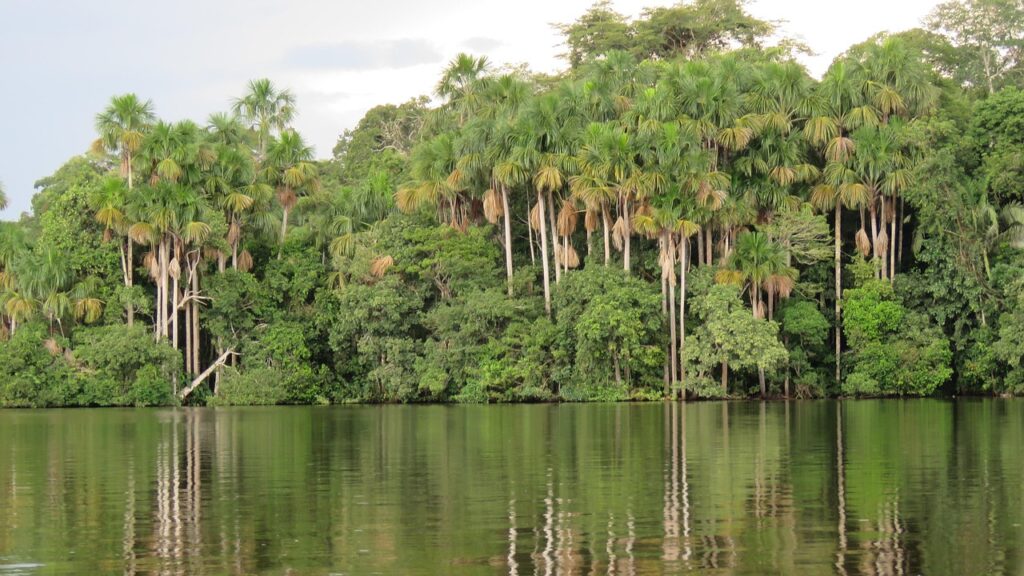
A Living System Under Pressure
The Amazon rainforest is the largest tropical rainforest on Earth, but it is not the only one. Alongside the Congo Basin rainforest in Central Africa and the rainforests of Southeast Asia, these three regions form the planet’s primary tropical forest systems. Together, they regulate climate, influence global rainfall patterns, store enormous amounts of carbon, and support much of the world’s remaining biodiversity.
Of the three, the Amazon is by far the largest. It spans nine countries, with the majority lying in Brazil, and covers an area larger than the continental United States. Because of its scale, the Amazon plays an outsized role in stabilizing weather systems, sustaining agriculture, and moderating climate conditions far beyond South America. What happens in the Amazon does not remain local. Its health influences ecosystems, food systems, and weather patterns across much of the world.
For much of modern history, the Amazon was viewed as vast, remote, and resilient. That assumption no longer holds. While the forest remains immense, it is now under sustained pressure from economic demand, land-use expansion, and global consumption patterns that increasingly test its limits.
How Big the Amazon Is — and What Has Already Been Lost
At its original extent, the Amazon rainforest covered roughly 6.7 million square kilometers. Today, an estimated 17 to 20 percent of that forest has been cleared or severely degraded. This loss did not occur suddenly, nor did it come from a single cause. It unfolded gradually over decades as roads expanded, markets grew, and land was converted for industrial use.
Equally important is how this loss has occurred. Large, intact forests are resilient systems. When forests are broken into fragments, their ability to regulate moisture, maintain biodiversity, and recover from disturbance declines. Forest edges dry out more quickly, temperatures rise locally, and ecosystems become increasingly vulnerable to fire and further clearing.
Deforestation is not only the removal of trees. It is the weakening of systems that evolved to function across immense, uninterrupted landscapes.
How Fast the Amazon Is Shrinking Today
Deforestation in the Amazon continues into the present. Annual rates fluctuate depending on enforcement, economic conditions, and political priorities, but each year thousands of square miles of forest are still cleared or degraded. Periods of reduced deforestation have been followed by renewed increases, underscoring how fragile progress can be.
The speed of loss matters because rainforest systems cannot regenerate instantly. As deforestation advances, remaining forest areas become drier and more fire-prone. Fires, once rare in intact rainforest, now occur more frequently, degrading ecosystems and making recovery increasingly difficult.
Researchers warn that if deforestation continues beyond certain thresholds, parts of the Amazon could shift toward savanna-like ecosystems. Such a transformation would permanently alter rainfall patterns, carbon storage, and biodiversity, with consequences reaching far beyond the region itself.
What Is Driving Deforestation
The primary drivers of Amazon deforestation are large-scale economic activities connected to global markets rather than local subsistence farming.
Cattle ranching is the single largest contributor. Vast areas of forest are cleared to create pastureland, supplying beef for domestic and international markets. Much of this production is tied to global demand rather than local consumption.
Soy production is another major factor. While soy is consumed directly in some regions, most is used as animal feed for poultry and pork production worldwide. As meat consumption increases, pressure on forest land rises accordingly.
Logging, both legal and illegal, contributes directly by removing trees and indirectly by opening access roads into previously intact forest. Mining operations, energy projects, and infrastructure development further fragment ecosystems and accelerate settlement and land conversion.
These forces operate together, reinforcing one another through supply chains that extend far beyond the Amazon.
Why the Pressure Exists
At the core of Amazon deforestation is a mismatch between natural limits and human demand. The global population continues to grow. Diets increasingly rely on resource-intensive foods. Economic systems reward short-term production more than long-term ecological stability.
From a narrow economic perspective, cleared land often appears more valuable than standing forest. Pasture, crops, minerals, and infrastructure generate immediate returns. The broader costs — disrupted rainfall, climate instability, biodiversity loss — are long-term and widely shared.
The Amazon is being asked to produce more than it can sustainably provide. This pressure is not driven by a single country or group, but by global systems that prioritize extraction over regeneration.
Why the Amazon Matters to Everyone
The Amazon plays a critical role in regulating rainfall across South America, including regions vital to global food production. Moisture generated by the forest influences agricultural productivity thousands of miles away. As forest cover declines, these rainfall systems become less reliable.
The forest also stores enormous amounts of carbon, helping to moderate global temperatures. Continued deforestation releases stored carbon while reducing the forest’s ability to absorb future emissions.
Beyond climate, the Amazon supports extraordinary biological diversity. Countless plant species, many with potential agricultural or medicinal value, exist only within this ecosystem. Their loss represents both ecological harm and a narrowing of future options.
Where Responsibility Really Lies
Amazon deforestation is often framed as a distant problem, but responsibility is broadly shared. Consumption patterns, agricultural systems, and market demand in wealthier regions directly influence land-use decisions within the forest.
Individual choices alone will not solve systemic problems. However, global demand shapes production, and changes in that demand matter when multiplied across millions of people.
Protecting the Amazon requires policy, enforcement, and economic reform — but it also requires awareness of how everyday products connect to distant ecosystems.
Agriculture, Seeds, and Long-Term Resilience
Agriculture lies at the center of the issue. How food is grown, sourced, and valued determines how much pressure is placed on natural systems. Diverse and resilient agricultural systems reduce dependence on expansion into forested land.
Seed diversity plays a quiet but essential role in resilience. When agriculture relies on a narrow set of crops, vulnerability increases and land expansion becomes more likely. Supporting diverse crops, regionally adapted varieties, and sustainable growing practices helps reduce pressure on intact ecosystems.
Looking Forward
The future of the Amazon will not be decided by a single decision or organization. It will be shaped by millions of choices made over time. While the challenges are significant, the outcome is not predetermined.
Understanding the Amazon’s role in global systems is a first step toward more responsible decisions. The forest remains vast, complex, and powerful. Whether it continues to function as one of Earth’s great stabilizing systems depends on how seriously its value is understood — and how carefully its future is considered.
The Hatchi Seeds and The Amazon
Hatchi Seeds did not begin as a marketing idea or an online shop.
It began on real soil in California, where we operated a working farm for more than two decades. During those years we grew specialty crops—including three varieties of passion fruit, cherimoyas, mini limes, exotic lemons, Buddha’s hand, etrog, jujube, Asian squash varieties, dahlias, irises, bulbs, and ornamental flowers. From that, our customers began wondering if they could order seeds fromus because they were not available on the internet as we were so in front of the curve on exotic fruits such as passion frui. We were one of only two farms nationwide selling passion fruit, and cherimoya. So White Dove farm began offering a limited selection of seeds and became unexpectedly successful with customers who appreciated honesty, authenticity and that, “out front” initiative.
Commitment
Also our mission statement spoke for itself: As a small producer, we were committed not only to our crops, but to the planet that made them possible. For every box of passion fruit sold, we contributed one dollar to Amazon reforestation efforts, partnering with organizations such as One Tree Planted and Amazon Watch. Over time, those contributions helped reforest an estimated five acres of the Amazon basin—a modest but meaningful effort at restoring one of the world’s most critical carbon sinks.
But the environment changed. Industry pressures changed. The rate of interest in the Amazon increased, and also everyone’s lives changed, too.
As these changes took place, just like in the changing national interest in exotic and culturally oriented fruits move forward, we began forming the early vision for Hatchi Seeds (then White Dove Seed), we realized that our next chapter needed to be about more than farming a mere 11-acres and we could not supply the seeds the new demand was creating and we were obviously narrowly focused on a handful of fruits and vegetables . We wanted to focus on the over all issue climate resilience, ecological restoration, and the global seed diversity that gardeners everywhere depend upon and how it fits with the vast majority if not all USA customers view on what should be done with the messy issues facing our heavily farmed soils and Earth, The Blue Marble, itself.
Hatch Seeds , once White Dove Farm, returns in a meaningful way to advance the narrative and combine decades of practical agricultural experience, advanced state licensing, plant-health expertise, environmental responsibility, with a renewed, invigorated and forward-looking dedication to issues. We know what it feels like to work the land, to protect it, and to rely on it. And we understand how seeds connect everyday, and you the gardener to the larger ecological story.
Hatchi Seeds .
Rooted in experience. Inspired by respect for plants, soil, and an earth we all walk and grow our families upon.
We’re here again—, and committed to building gardens with our seeds and rebuilding the greatest garden on earth, the Amazon, through consistent donations to the three organizations we believe are making a difference in climate issues.
Hatchi Seeds –
Licenses and Certifications – https://hatchiseeds.com/lic-credentials-hatchi/