
35 Pest Insects Common To All States
Spider Mites — Genus: Tetranychus spp.
Size: ~0.4–0.5 mm (0.016–0.02 in)
Spider mites are extremely tiny sap-feeders related to spiders and ticks, and they often explode during hot, dry weather. They feed by piercing leaf cells and removing contents, creating fine yellow stippling that gradually turns leaves dull, bronzed, or scorched. Because they are so small, gardeners often notice the plant symptoms first: leaves lose color, look dusty, then dry and drop early. In heavier infestations, you may see thin webbing on leaf undersides and between stems—especially on tomatoes, beans, cucumbers, squash, peppers, eggplant, strawberries, and many ornamentals. Spider mites thrive when plants are stressed by heat, low humidity, or inconsistent watering. Damage is not holes; it’s a “faded” look that spreads from lower leaves upward. Yield drops because the plant can’t photosynthesize efficiently. Mites also spread quickly from plant to plant when foliage touches. Catching them early matters, because once webbing is visible, populations are usually high and recovery is slower.
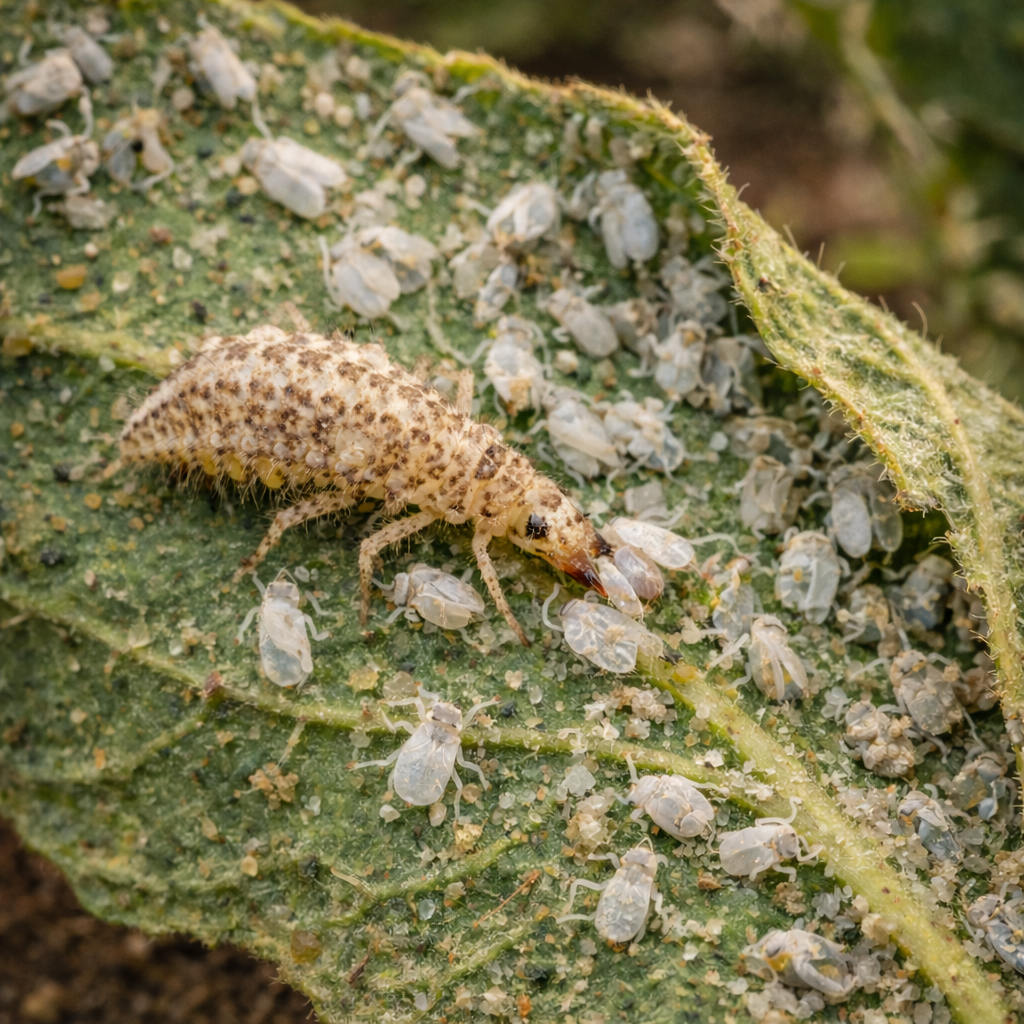
Whiteflies — Genus: Bemisia spp. (most commonly B. tabaci)
Size: ~0.9–1.4 mm (0.035–0.055 in.
Whiteflies look like tiny white moths and usually live on the undersides of leaves. A classic sign is that adults lift off in a small “white cloud” when you brush the plant. They feed by sucking sap, which weakens plants and causes leaf yellowing, droop, and drop, especially on tomatoes, peppers, beans, squash, cucumbers, eggplant, citrus, ornamentals, and many houseplants. Like aphids, whiteflies produce sticky honeydew that coats leaves, attracts ants, and encourages sooty mold. In vegetable gardens, whitefly pressure is often worst in warm weather and in sheltered spots with dense foliage or poor airflow. Damage is not chewing holes; instead, plants look tired, pale, and less productive. Fruit set can decline because stressed plants stop pushing strong new growth. Whiteflies can be persistent because multiple life stages are present at the same time, and the immature stages stay attached to the leaf. If you’re seeing sticky leaves plus clouds of tiny white insects, you’re usually dealing with an established population that needs steady follow-through.
orem ipsum dolor sit amet, consectetur adipiscing elit. Ut elit tellus, luctus nec ullamcorper mattis, pulvinar dapibus leo.
<a id=”thrips”></a>
Thrips — Genus: Frankliniella spp.
Size: ~1–2 mm (0.04–0.08 in)
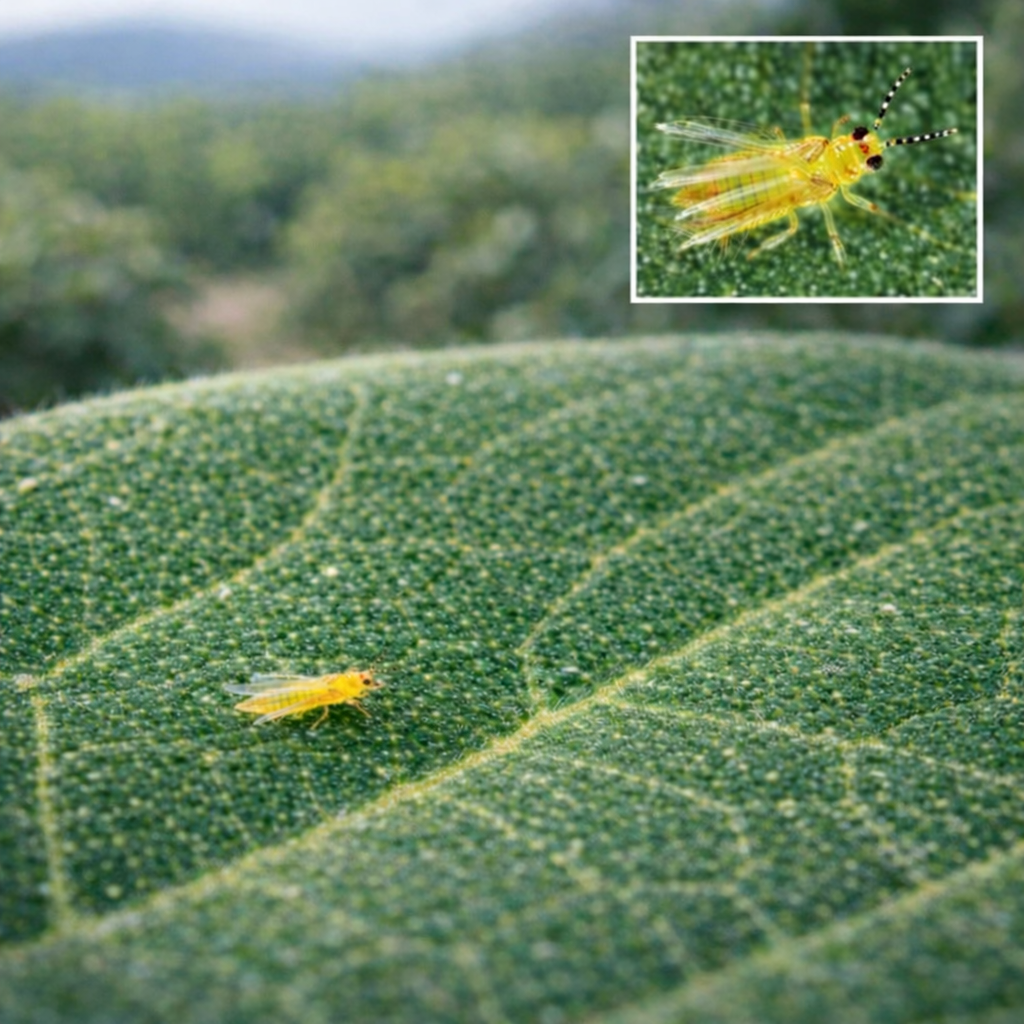
Thrips are slender, fast-moving insects that feed by scraping the surface of leaves and flowers and then sucking up plant fluids. The result is a distinctive “silvery” or bronzed streaking rather than holes. New leaves may look distorted or crinkled, and flower petals can appear scarred, spotted, or deformed. In vegetable gardens, thrips commonly hit onions, tomatoes, peppers, beans, squash, lettuce, strawberries, and many ornamentals. They tend to be worse during warm, dry weather, and they build quickly in dense plantings or protected growing areas. Because thrips feed inside buds and flowers, they can be hard to spot until damage is already visible. Another clue is tiny black specks (their droppings) on leaves or petals. Thrips injury can reduce fruit quality and can cause blossoms to drop or fail, which directly lowers yields. Damage often appears patchy at first—one plant or one part of a plant—then spreads. Thrips don’t chew chunks out; instead they “sandpaper” the surface, leaving a dull shine and weakened tissue that can dry out in heat.
Cabbage Worms — Species: Pieris rapae (imported cabbageworm)
Size: ~25–30 mm (1–1.2 in)
Cabbage worms are smooth green caterpillars that blend into leafy greens, making them easy to miss until damage is obvious. They chew ragged holes in leaves, often starting on the undersides, and they can burrow into developing heads where they contaminate produce with dark droppings. In home vegetable gardens, cabbage worms are most common on cabbage, broccoli, cauliflower, kale, collards, and Brussels sprouts. Damage can move quickly because caterpillars feed daily and can strip large areas of leaf tissue, reducing the plant’s ability to grow strong heads or side shoots. Look for irregular holes, missing leaf edges, and frass (small dark pellets) lodged in leaf folds. Plants may still survive, but yield and quality drop fast when feeding is heavy. Cabbage worms are usually worst in cooler seasons—spring and fall—when brassicas are actively growing. Unlike sap-feeders, this is direct chewing damage: leaf area disappears, and the crop can become unmarketable. Even a “light” infestation can ruin the harvest if caterpillars are feeding inside heads where washing can’t reach.
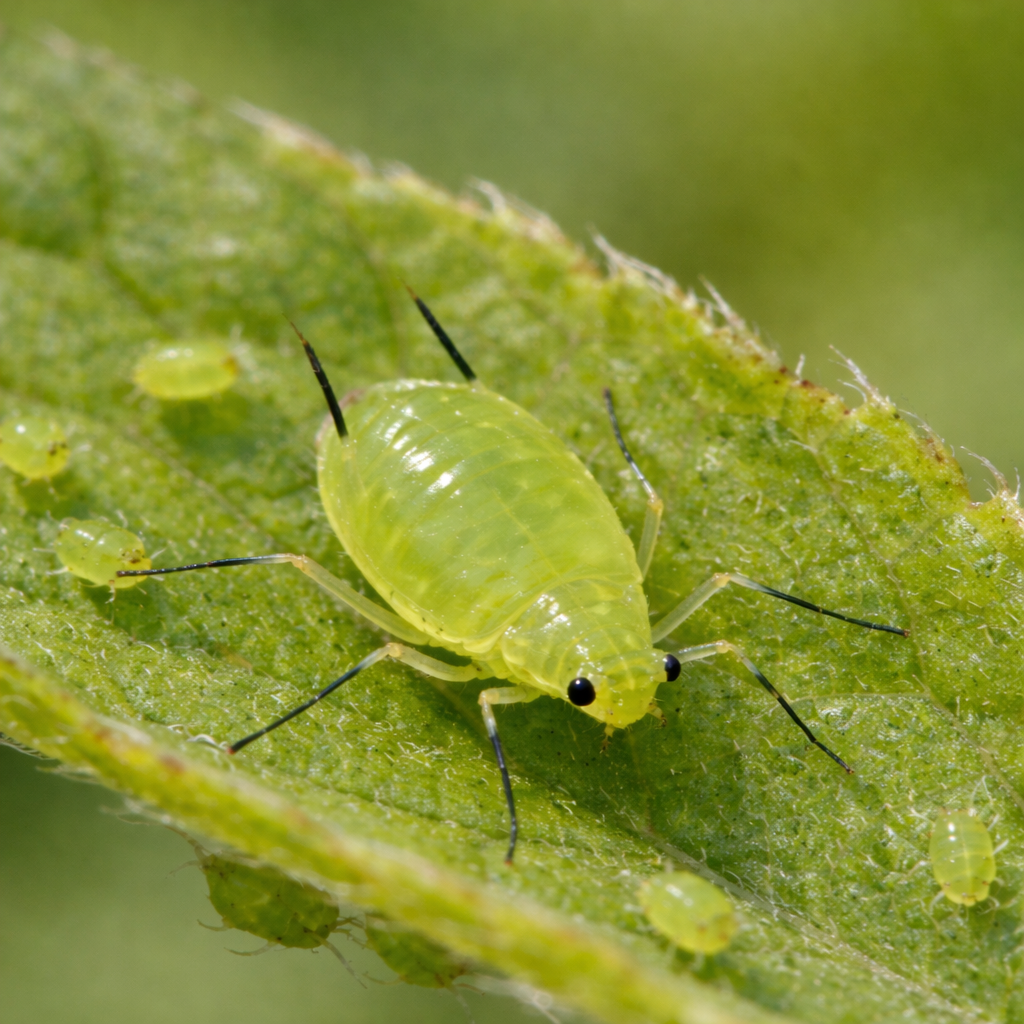
Aphids — Genus: Aphis spp.
Size: ~1–4 mm (0.04–0.16 in)
Aphids are small, soft-bodied insects that gather in tight clusters on tender new growth, leaf undersides, and flower buds. Colors vary, but green is most common; you may also see black, yellow, or brown forms. In vegetable gardens, aphids feed by sucking sap, which leads to curled leaves, puckering, yellowing, and slowed growth. New transplants and seedlings can be set back fast because aphids prefer the softest tissue. Aphids also create a sticky coating called honeydew that attracts ants and can lead to black sooty mold on leaves, which blocks sunlight and reduces plant energy. Common host plants include tomatoes, peppers, beans, lettuce, brassicas, squash, cucumbers, and many herbs. You’ll often notice ants “farming” aphids, which is a clue the colony is established. Aphids don’t usually leave holes; damage looks like distortion, shine, and general weakening. When populations rise, flower set can drop and fruit size can suffer, especially in warm spells and over-fertilized, lush growth.
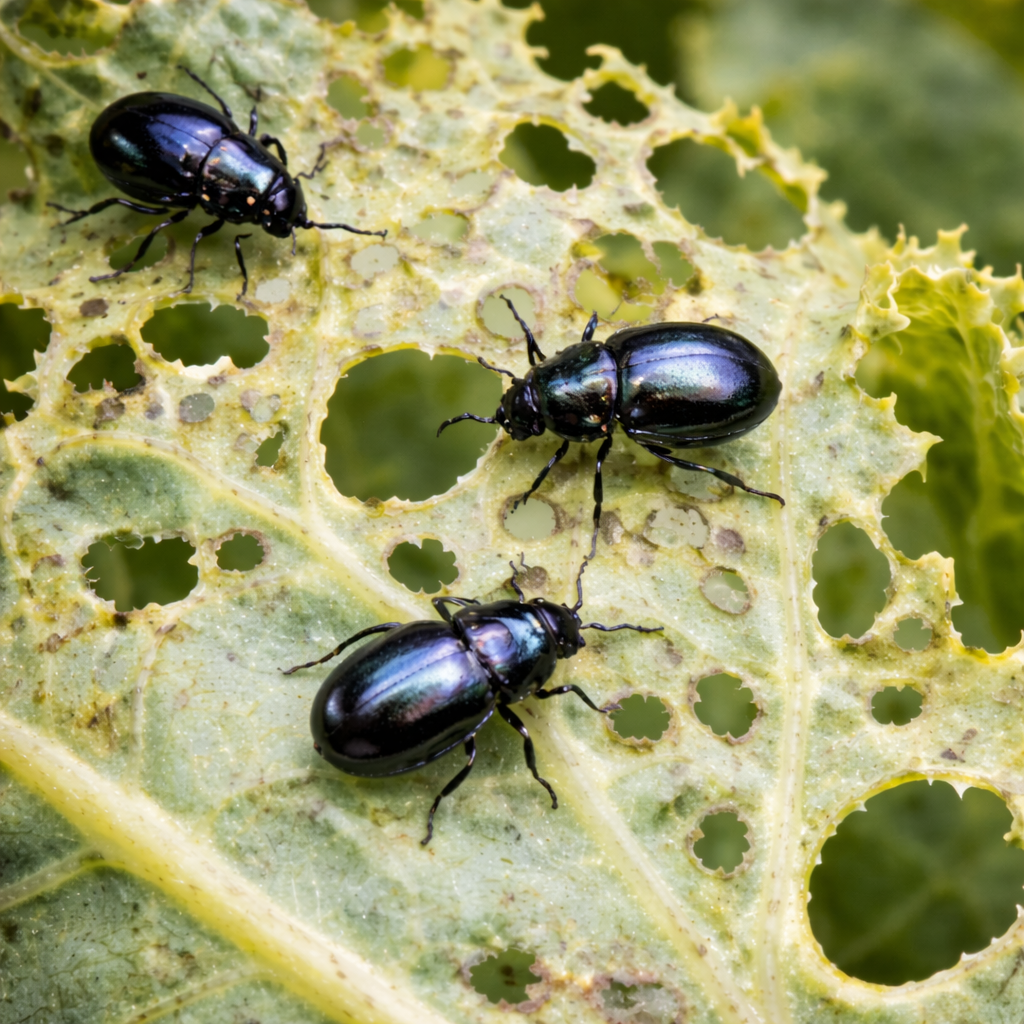
Flea Beetles — Genus: Phyllotreta spp.
Size: ~1.5–3 mm (0.06–0.12 in)
Flea beetles are tiny, hard-bodied beetles that jump like fleas when disturbed. Their feeding creates many small, round holes that look like “shot-holes,” especially on young leaves. Seedlings and transplants are the most vulnerable, because a small insect can remove a large percentage of leaf area relative to the plant’s size. In vegetable gardens, flea beetles commonly attack eggplant, tomatoes, peppers, potatoes, radishes, arugula, and brassicas. Damage is often worst in spring when plants are small and beetles are active. You may see leaves that look peppered with holes, or thin, shredded areas where holes merge. Mature plants can sometimes outgrow light feeding, but repeated injury slows growth and reduces harvest timing. Flea beetles cause chewing damage, not sap-sucking distortion. If you watch closely on a sunny day, you may see small dark or metallic beetles hopping away. Stress from drought or heat can make the impact worse because plants can’t replace leaf tissue quickly. When seedlings stall early, later yields often suffer even if plants recover visually.
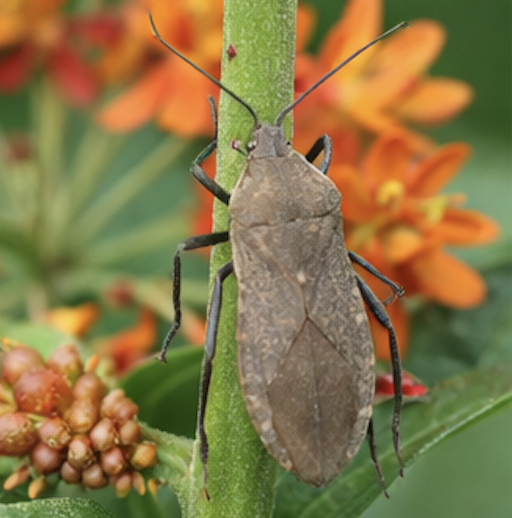
Squash Bugs — Species: Anasa tristis
Size: ~14–16 mm (0.55–0.63 in)
Squash bugs are large, flat, brown insects that feed with piercing mouthparts on stems and leaves of cucurbits. Their feeding disrupts water movement and injects toxic saliva, which causes leaves to wilt, yellow, and sometimes die back even when soil moisture is adequate. In vegetable gardens, squash bugs primarily attack squash, pumpkins, zucchini, and melons. A common pattern is sudden wilting on one vine or one section of a plant, followed by collapse if pressure is high. Eggs are typically laid in clusters on leaf undersides, and the nymphs (young stages) feed in groups, which accelerates damage. Unlike chewing pests, squash bugs don’t remove chunks of leaf; they weaken the plant from the inside. Plants under stress—hot weather, poor airflow, crowded vines—tend to suffer more. Damage can reduce fruit set and fruit quality, and severe infestations can kill young plants outright. If you find the egg clusters early and remove them consistently, you can prevent the mid-season population surge that turns a manageable issue into a crop failure.
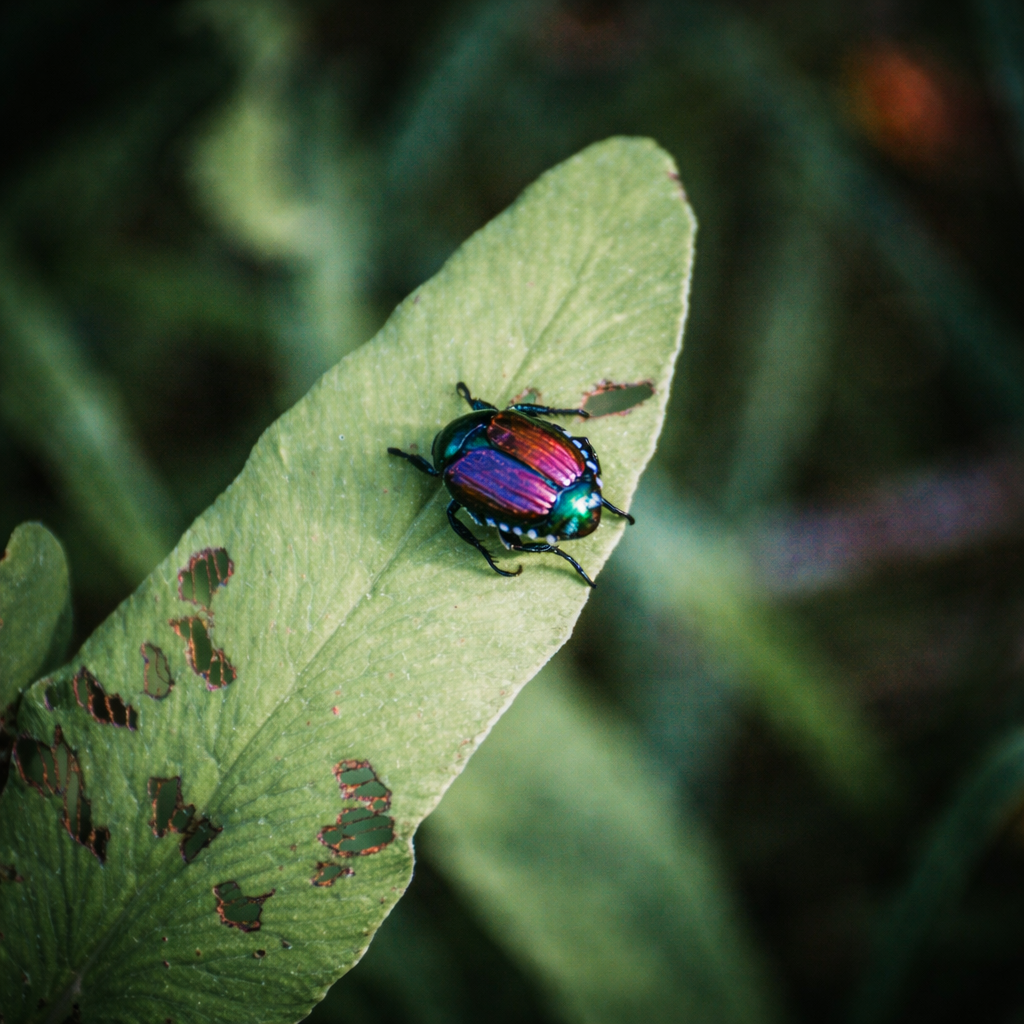
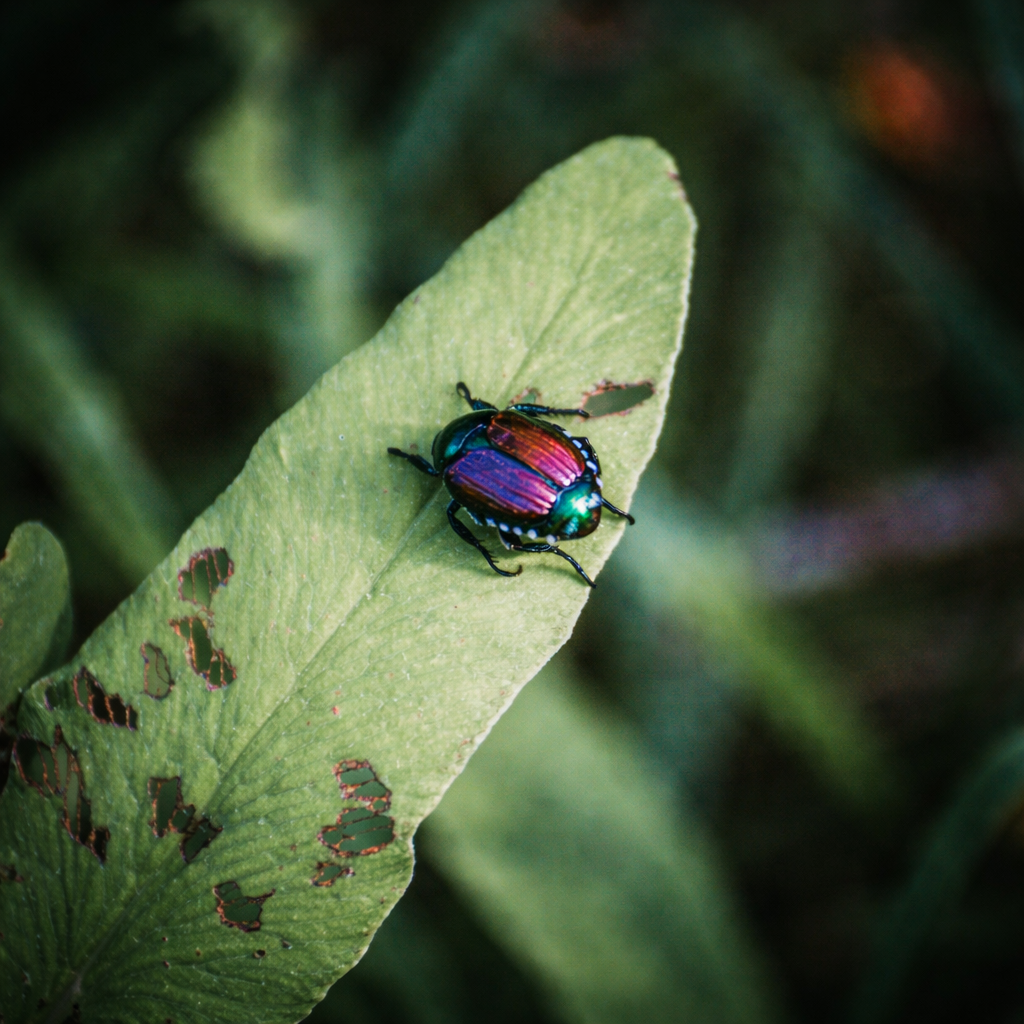
Japanese Beetles — Species: Popillia japonica
Size: ~10–12 mm (0.4–0.5 in)
Japanese beetles are metallic green beetles with copper-brown wing covers, and they often feed in groups. Their signature damage is “skeletonizing” leaves—eating the tissue between veins and leaving a lace-like pattern. In vegetable gardens, they commonly hit beans, corn, tomatoes, grapes, berries, fruit trees, and many ornamentals. Because they aggregate, damage can appear suddenly and severe on a favorite plant while nearby plants look fine. Peak feeding is usually mid-summer, and repeated defoliation weakens plants, reduces yield, and can slow recovery during hot weather. This is chewing damage, not sap-feeding distortion. Leaves may look like a net, with veins intact but most green tissue gone. Flowers can also be damaged, and fruit can be scarred. Even if plants survive, heavy leaf loss reduces photosynthesis and can shrink fruit size or reduce overall production. When you see multiple beetles on one leaf, that’s often the start of a bigger wave, because feeding attracts more beetles to the same plant.
Leafminers — Genus: Liriomyza spp.
Size: Larvae ~2–3 mm (0.08–0.12 in)
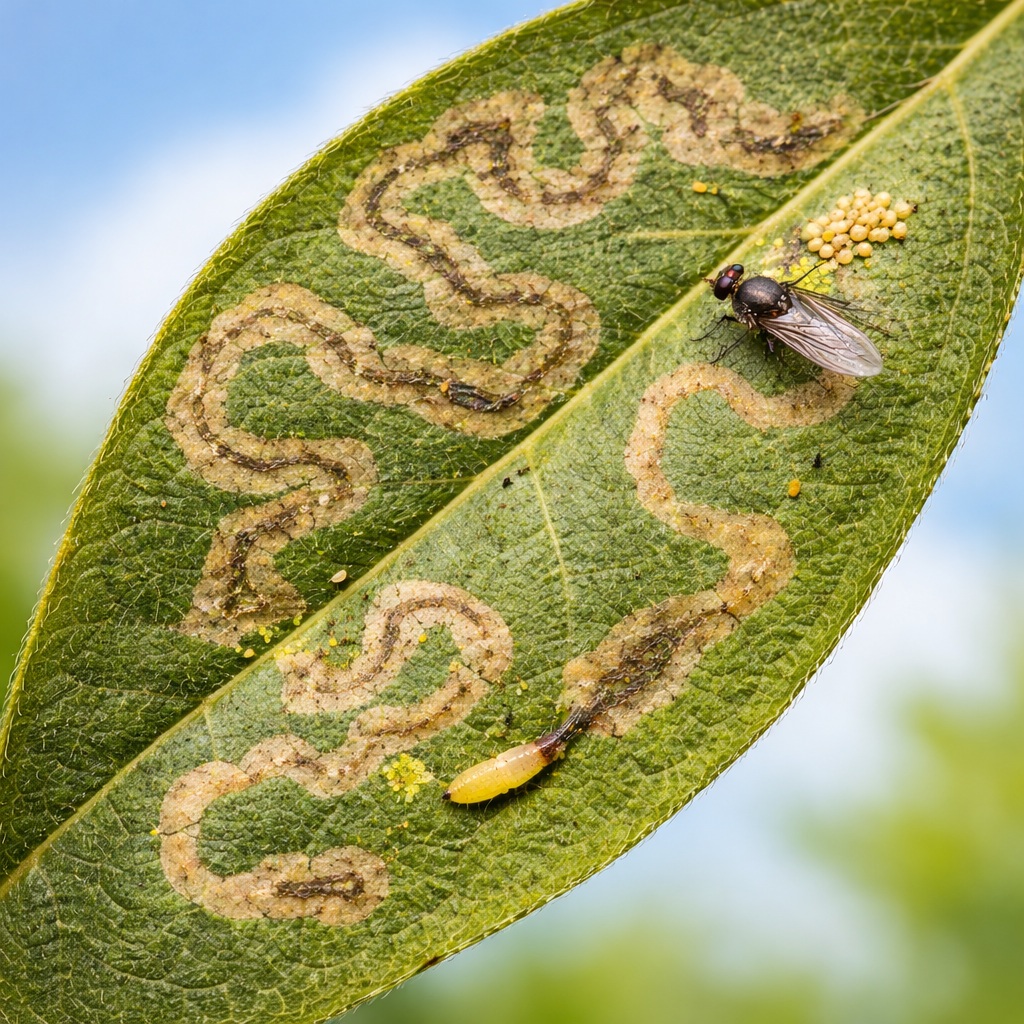
Leafminers are larvae that live and feed inside leaves, creating winding, pale trails that look like scribbles. The tunnels are made as the larva eats the inner leaf tissue while the outer layers remain mostly intact. In vegetable gardens, leafminer damage is common on spinach, beets, chard, lettuce, tomatoes, and some ornamentals. Light mining is mostly cosmetic, but heavy mining reduces photosynthesis and can weaken plants, especially leafy crops where the leaf is the harvest. Leaves may yellow, dry at the edges, or look dirty and unusable for salads. Because the feeding is inside the leaf, you won’t see classic holes, and spraying the leaf surface doesn’t always reach the pest stage that’s doing the damage. Mines often start as thin lines and widen as the larva grows. Young plants can be set back if many leaves are mined at once. In warm conditions, generations can overlap, so you may see new fresh mines while older ones dry out, giving plants a patchy, tired look and reducing overall garden quality.
Cutworms — Family: Noctuidae (various species)
Size: ~25–50 mm (1–2 in)
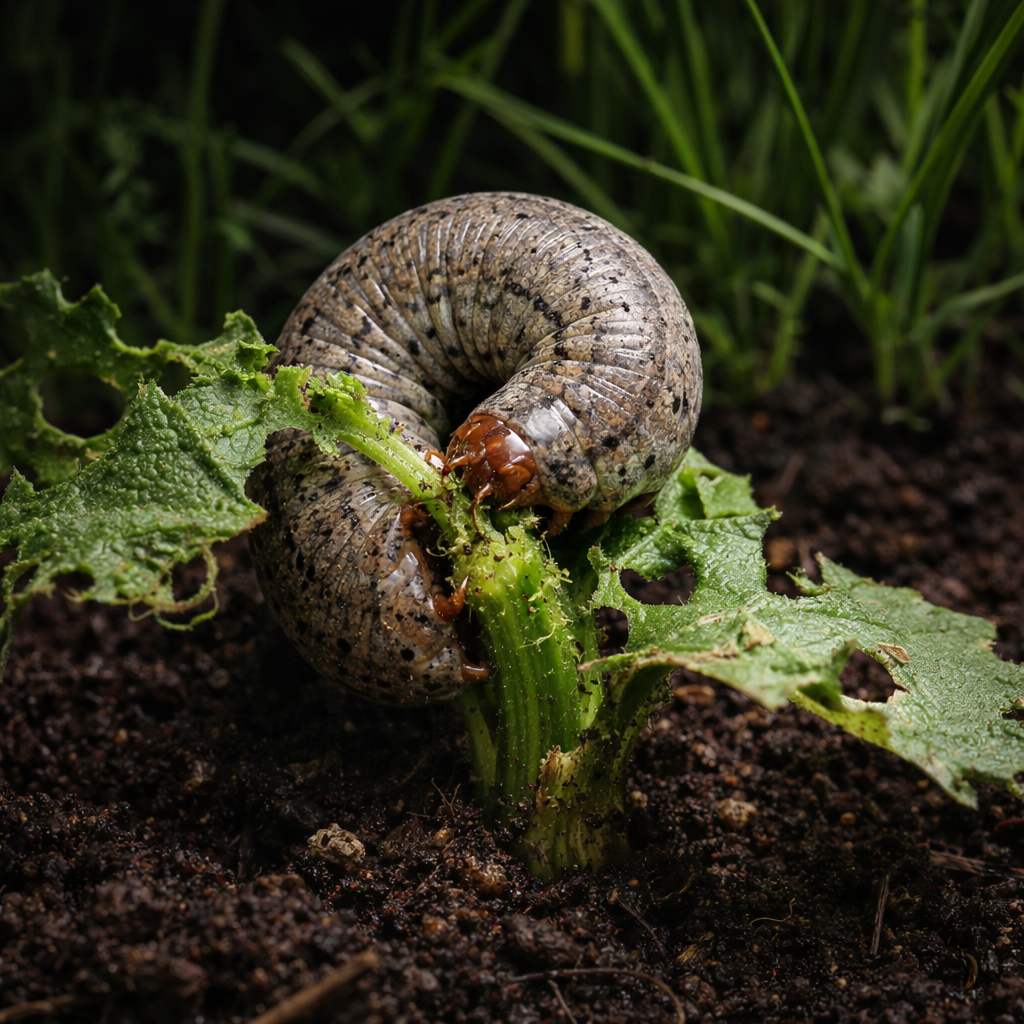
Cutworms are thick caterpillars that hide in soil or under debris during the day and feed at night. Their most frustrating behavior is cutting seedlings off at the base, often right at soil level, which makes healthy young plants collapse overnight. In vegetable gardens, cutworms commonly damage tomatoes, peppers, corn, beans, cabbage-family crops, and many direct-seeded vegetables. The pattern is usually sudden: one morning the stem is severed and the plant is laying on the ground nearby. Some cutworms also climb and chew leaves, but the classic injury is a clean “cut” stem. This is chewing damage, not sap-sucking. Cutworms are most common in spring and early summer, especially where weeds were recently turned under or where mulch and plant residue provide hiding spots. If you gently dig around the base of a cut seedling, you can often find the caterpillar curled in a C-shape within the top inch or two of soil. Even a few cutworms can wipe out a row of new transplants quickly.
Armyworms — Genus: Spodoptera spp.
Size: ~30–40 mm (1.2–1.6 in)
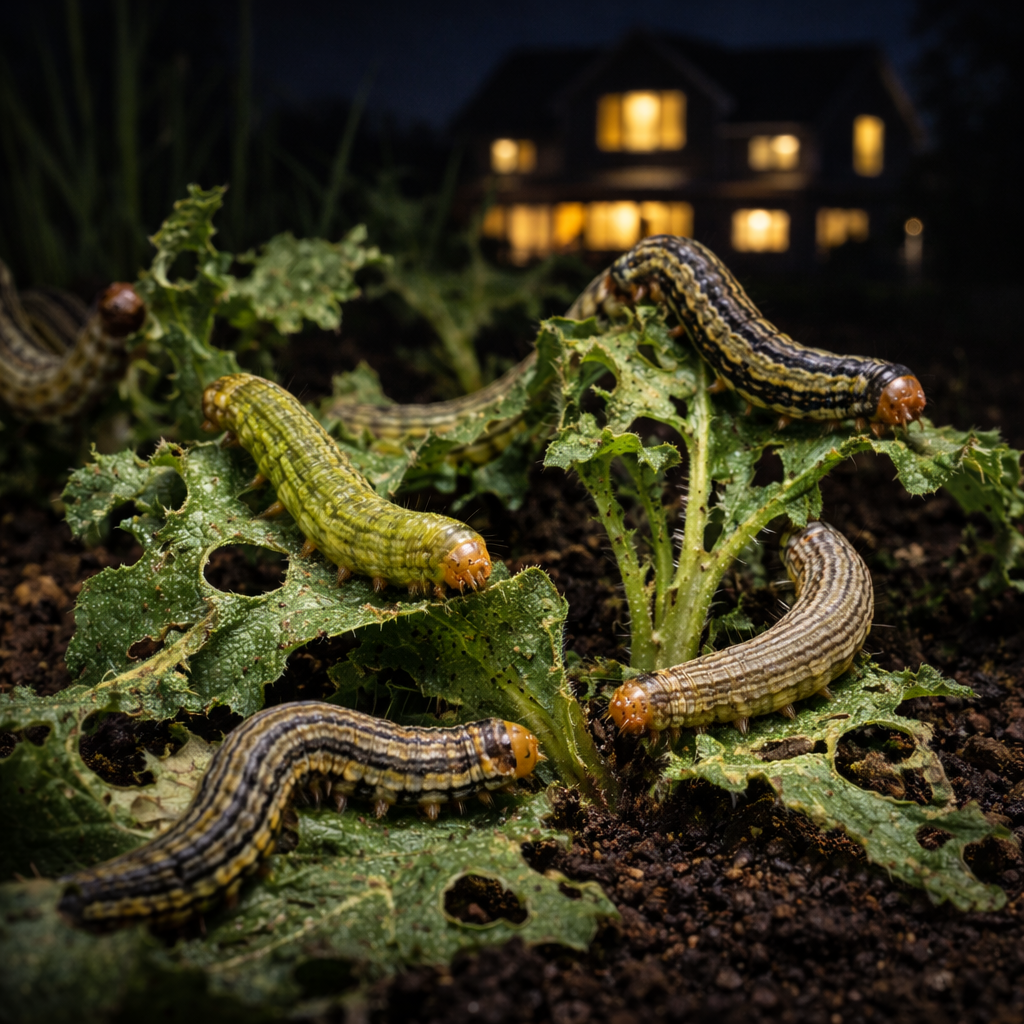
Armyworms are caterpillars known for sudden, destructive feeding that appears almost overnight. They earn their name because they move across garden beds in groups, consuming foliage as they go. In vegetable gardens, armyworms chew leaves aggressively, leaving ragged edges and stripped plants. Feeding is most intense during warm weather, especially late spring through summer. Young larvae may skeletonize leaves, while older larvae consume entire leaf sections. Common host plants include corn, tomatoes, peppers, beans, lettuce, onions, and many leafy greens. Damage often begins on lower leaves and moves upward as caterpillars grow. Armyworms hide in soil or plant debris during the day and feed mostly at night, making early detection difficult. Plants may look fine one evening and heavily damaged the next morning. Heavy infestations can defoliate crops rapidly, reducing yield and stressing plants during critical growth stages. Because feeding is direct chewing, damage is obvious and cumulative. Stressed or fertilized plants with lush growth often attract higher pressure.
Corn Earworms — Species: Helicoverpa zea
Size: ~25–45 mm (1–1.8 in)
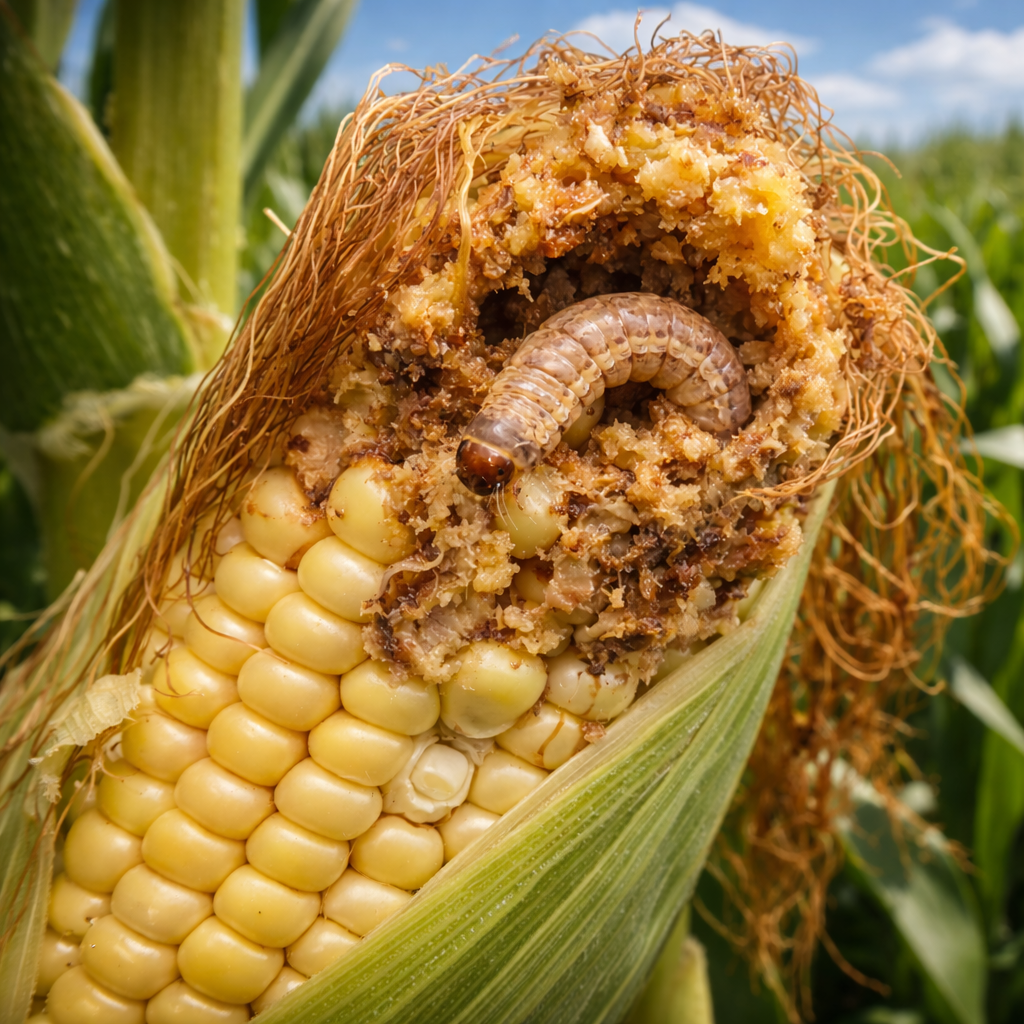
Corn earworms are caterpillars that primarily target developing fruits rather than leaves. In vegetable gardens, they are notorious for boring into corn ears, tomatoes, peppers, and beans. Larvae chew directly into fruits, contaminating them with frass and internal feeding damage. Entry holes may be small, but internal damage can be extensive. Corn earworms vary in color, often green, brown, or striped, making them hard to spot. Feeding reduces marketable yield and often invites secondary rot and disease. In tomatoes, a single larva can ruin multiple fruits as it moves from one to another. Damage is most common in mid to late summer when moth populations peak. Because larvae are protected inside fruits, control becomes more difficult once they enter. Plants may look healthy from a distance, but harvested produce reveals internal feeding. Corn earworms are especially frustrating because damage appears late, after plants have invested most of their energy into fruit production.
Stink Bugs — Genus: Euschistus spp.
Size: ~12–17 mm (0.5–0.7 in)
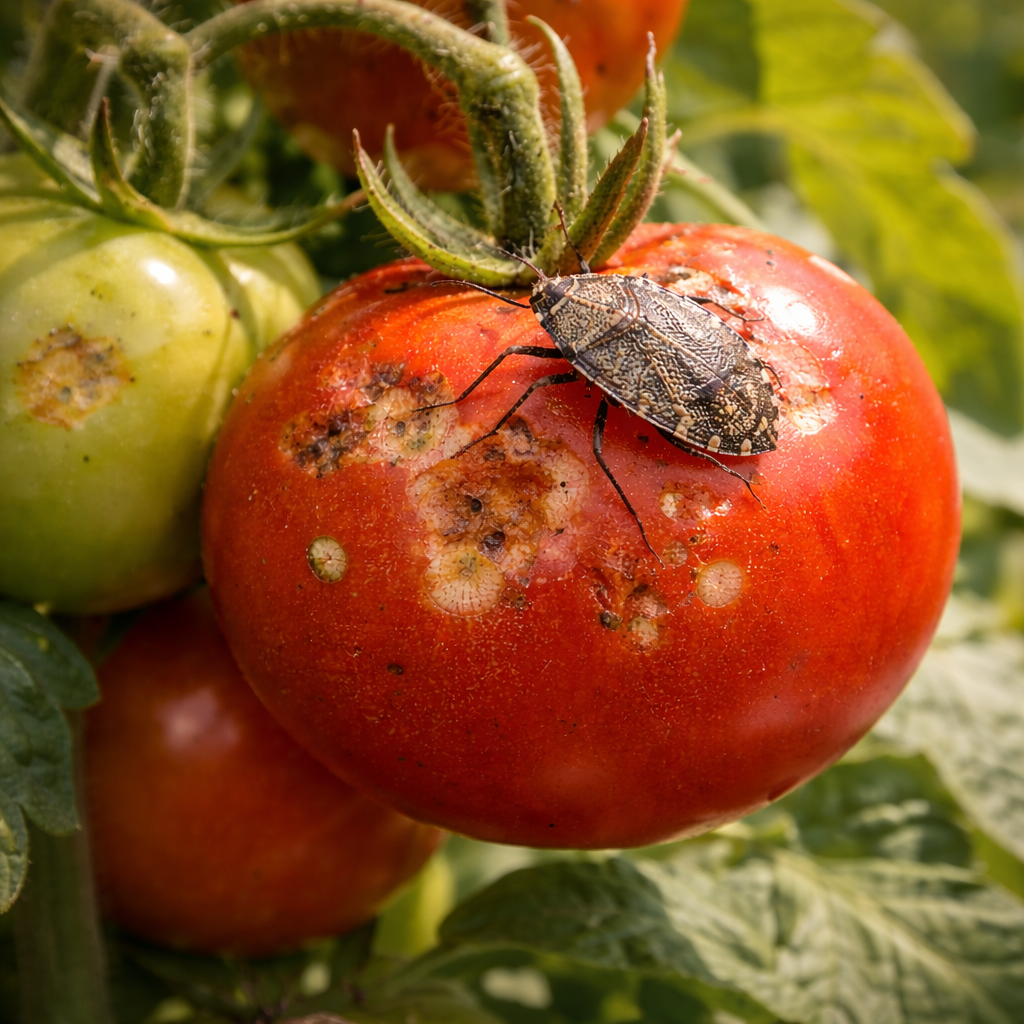
Stink bugs are shield-shaped insects that feed using piercing-sucking mouthparts. In vegetable gardens, they damage fruits by puncturing skins and feeding on internal tissues. This causes corky spots, deformities, and uneven ripening. Tomatoes, peppers, beans, corn, okra, and fruiting vegetables are frequent targets. Damage may not be obvious immediately but becomes visible as fruits mature and show sunken or discolored areas. Stink bugs are often most active in warm weather and migrate from nearby weeds or field edges into gardens. They tend to hide during the day and feed quietly, making infestations easy to overlook. Feeding does not cause holes; instead, fruit quality suffers internally. Repeated feeding weakens plants and reduces usable harvest. Because stink bugs are mobile and long-lived, populations can persist throughout the season. Gardeners often notice them when harvesting damaged produce rather than during active feeding.
Harlequin Bugs — Species: Murgantia histrionica
Size: ~7–10 mm (0.28–0.4 in)
Harlequin bugs are brightly colored stink bug relatives that primarily attack brassica crops. Their striking red, black, and orange markings make them easy to identify. In vegetable gardens, they feed by piercing leaves and stems, sucking sap and injecting toxic saliva. This causes pale spots that merge into larger areas of yellowing, wilting, and plant collapse. Cabbage, kale, broccoli, cauliflower, mustard greens, and collards are common hosts. Feeding damage often begins on leaf margins and spreads inward. Heavy infestations can kill young plants outright. Harlequin bugs thrive in warm weather and can produce multiple generations in a season. Eggs are laid in neat clusters on leaf undersides, allowing populations to build quickly if unchecked. Damage is more severe during summer heat when plants are already stressed. Unlike chewing insects, harlequin bugs weaken plants internally, leading to stunted growth and reduced head formation in brassicas.
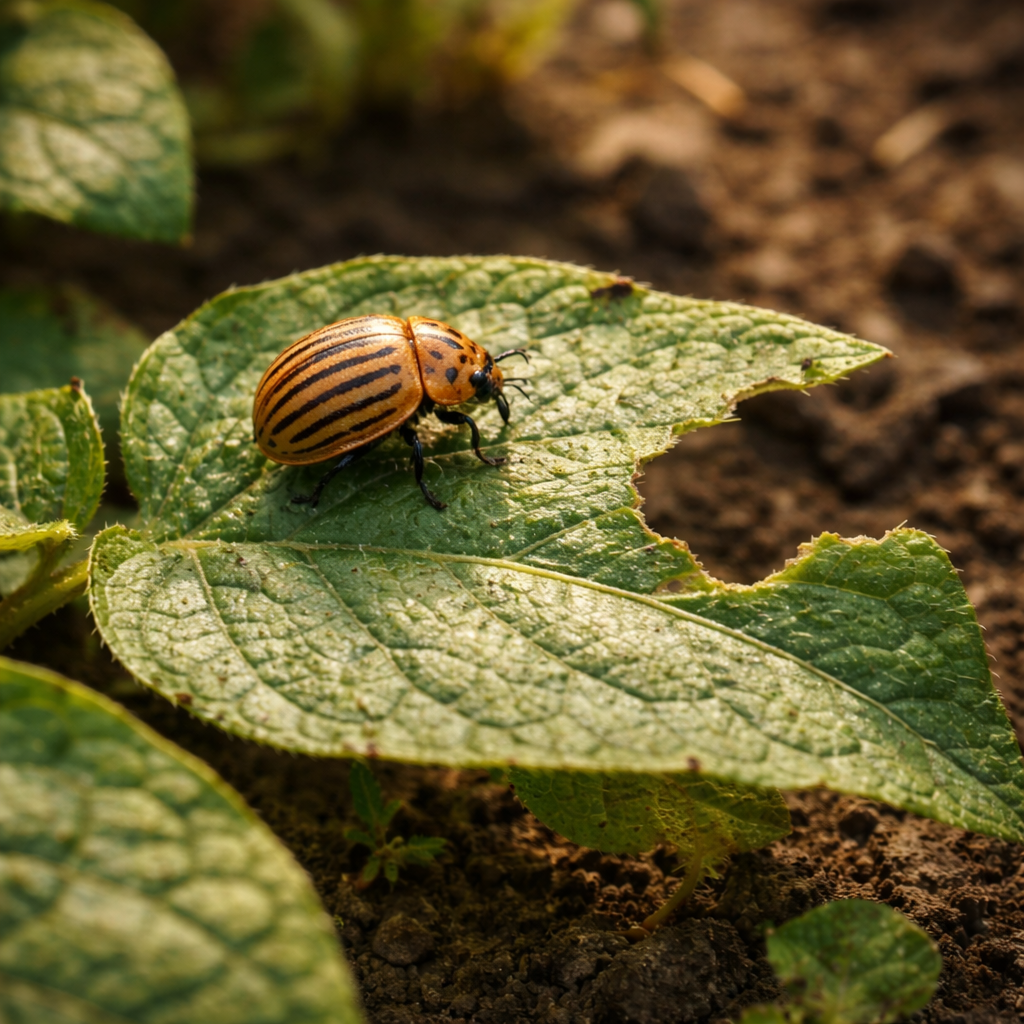
Colorado Potato Beetles — Species: Leptinotarsa decemlineata
Size: ~10–12 mm (0.4–0.5 in)
Colorado potato beetles are easily recognized by their yellow-and-black striped wing covers. Both adults and larvae feed heavily on foliage, making them one of the most destructive pests of potatoes. They also attack tomatoes, eggplant, and peppers. Larvae are reddish-orange and consume leaves rapidly, often stripping plants to bare stems if populations are high. Damage is most severe in warm weather when multiple generations overlap. Defoliation reduces photosynthesis, delays tuber development, and significantly lowers yields. Plants may survive light feeding, but repeated defoliation weakens them severely. Eggs are laid in clusters on leaf undersides, and larvae feed openly during the day. Because feeding is visible and aggressive, infestations escalate quickly. In small gardens, beetles can overwhelm crops if not managed early. Damage is classic chewing injury, with leaves disappearing rapidly during peak feeding periods.
Leafhoppers — Genus: Empoasca spp.
Size: ~3–4 mm (0.12–0.16 in)
Leafhoppers are small, wedge-shaped insects that move quickly when disturbed. They feed by piercing leaves and sucking sap, causing a condition known as “hopperburn.” Symptoms include leaf curling, yellowing at edges, browning, and eventual leaf drop. In vegetable gardens, leafhoppers commonly affect beans, potatoes, tomatoes, eggplant, lettuce, and strawberries. Damage often starts subtly, with pale leaf margins that gradually darken and dry. Leafhoppers thrive in warm conditions and migrate into gardens from surrounding vegetation. Feeding weakens plants and reduces yields, especially during dry periods. Unlike chewing insects, leafhoppers leave no holes, making damage harder to diagnose early. Heavy infestations reduce plant vigor and slow growth. Because they are highly mobile, populations can spread quickly across a garden. Leafhoppers are also known to transmit certain plant diseases, increasing their overall impact on crop health.
Root Maggots — Genus: Delia spp.
Size: ~6–8 mm larvae (0.25–0.3 in)
Root maggots are fly larvae that feed underground on plant roots and stems. In vegetable gardens, they are serious pests of radishes, turnips, onions, cabbage, broccoli, and cauliflower. Damage occurs below the soil surface, making early detection difficult. Affected plants may wilt, grow poorly, or collapse despite adequate water. Roots often show tunnels, decay, or complete destruction when pulled up. Feeding reduces nutrient uptake and weakens plants during early growth stages. Root maggots are most damaging in cool, moist conditions, especially spring and fall. Adult flies lay eggs near the soil surface, and larvae move directly into roots after hatching. Because damage is hidden, gardeners often discover infestations only after plants fail. Yield losses can be significant, particularly for root crops where the edible portion is directly damaged.
Tomato Hornworms — Species: Manduca quinquemaculata
Size: ~75–100 mm (3–4 in)
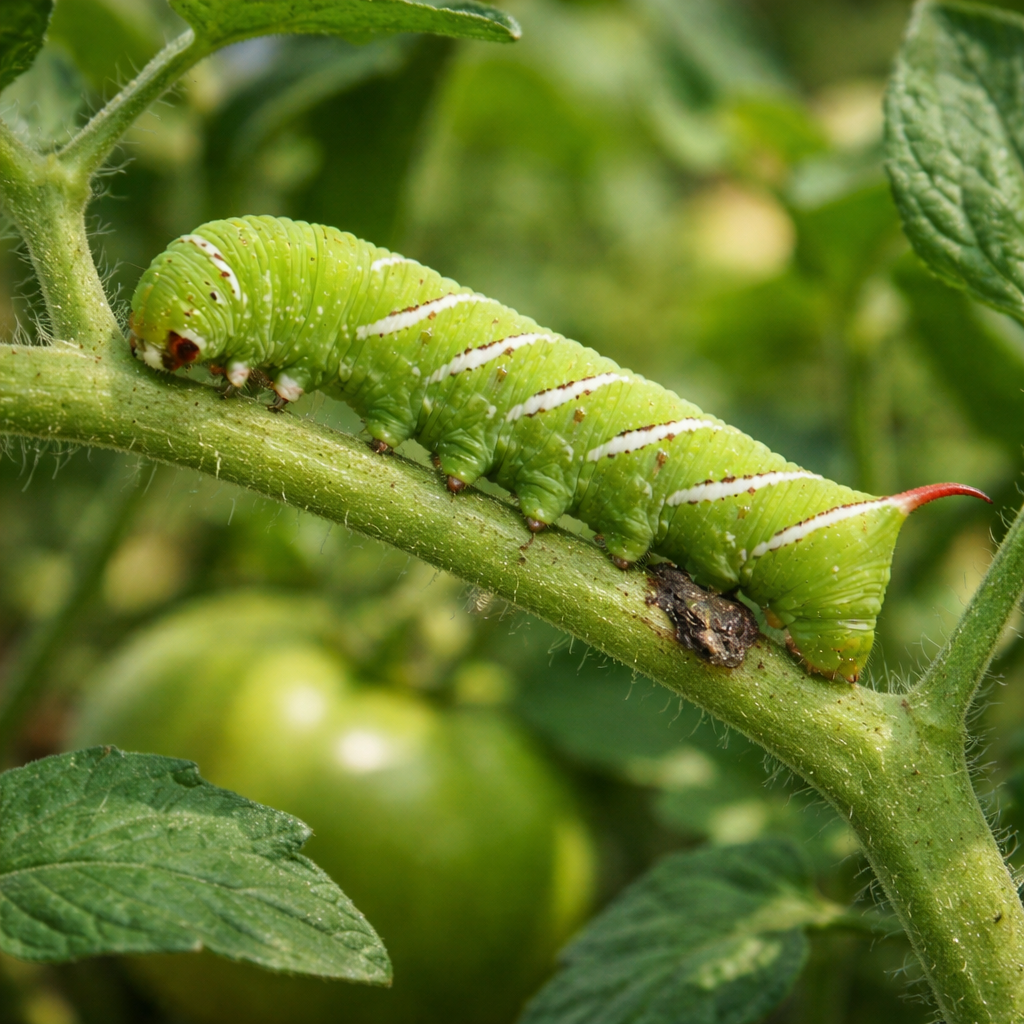
Tomato hornworms are large green caterpillars that blend remarkably well into tomato foliage. Despite their size, they are often overlooked until significant damage appears. Hornworms chew large sections of leaves, stems, and sometimes green fruit. Feeding can defoliate plants rapidly, leaving only bare stems behind. In vegetable gardens, they primarily attack tomatoes but also feed on peppers, eggplant, and potatoes. Damage is most severe in midsummer when larvae reach full size. Hornworms feed mostly at night and rest along stems during the day. Their droppings, which resemble dark pellets, are often the first sign of their presence. While a single hornworm can remove a surprising amount of foliage, plants may recover if damage is caught early. Severe defoliation, however, reduces fruit production and exposes fruit to sunscald.
Onion Maggots — Species: Delia antiqua
Size: ~6–8 mm larvae (0.25–0.3 in)
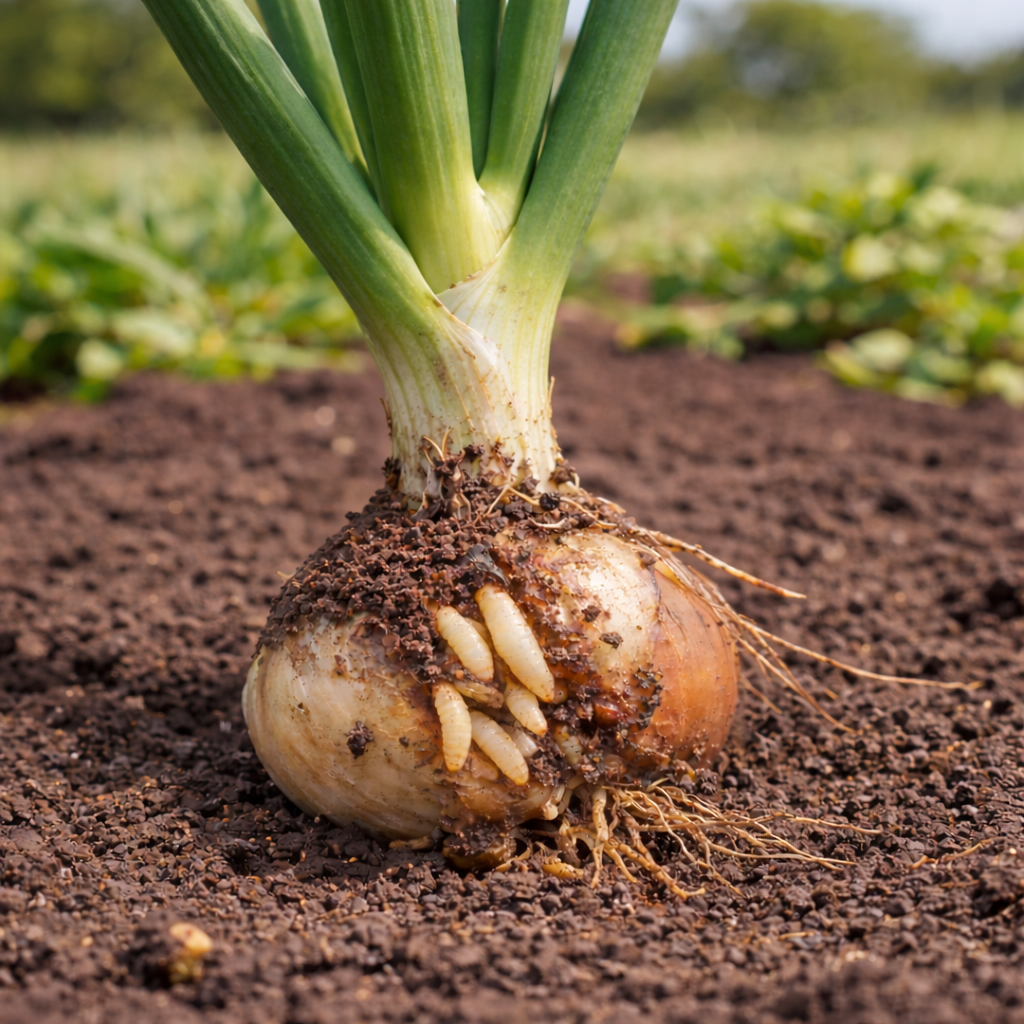
Onion maggots are fly larvae that attack onion-family crops by feeding at the base of plants and within bulbs. In vegetable gardens, they commonly damage onions, garlic, leeks, and shallots. Infested plants may wilt, yellow, and collapse suddenly. Bulbs often rot from the inside out, becoming soft and foul-smelling. Damage is most common in cool spring weather when adult flies are active. Because larvae feed below ground, infestations are difficult to detect until plants fail. Multiple larvae may attack a single bulb, accelerating decay. Onion maggots are especially destructive to seedlings and young transplants. Once bulbs are damaged, secondary rot organisms often take over, making crops unusable. Even small infestations can cause significant losses in onion plantings.
Mealybugs — Genus: Pseudococcus spp.
Size: ~3–5 mm (0.12–0.2 in)
Mealybugs are soft-bodied insects covered in a white, cottony wax that makes them easy to recognize. They feed by sucking sap from stems, leaf joints, and undersides of leaves. In vegetable gardens, mealybugs are more common on peppers, tomatoes, eggplant, herbs, and greenhouse-grown crops. Feeding causes yellowing, leaf drop, and reduced plant vigor. Like aphids, mealybugs excrete honeydew that attracts ants and promotes sooty mold. Infestations often start in protected areas where insects are shielded from predators. Because mealybugs move slowly and cluster tightly, populations can build unnoticed. Damage reduces plant energy and fruit production over time. Heavy infestations weaken plants significantly, especially in warm conditions where reproduction is rapid
Slugs — Genus: Deroceras spp.
Size: ~25–50 mm (1–2 in)
Slugs are soft-bodied, shell-less mollusks that feed primarily at night or during cool, damp conditions. In vegetable gardens, they chew large, irregular holes in leaves and can completely shred seedlings. Damage is often worst on young plants, where a single night of feeding can destroy an entire planting. Common host plants include lettuce, spinach, cabbage, kale, strawberries, beans, squash, and many ornamentals. A key sign of slug activity is the silvery slime trail left behind on soil, mulch, or leaves. Slugs thrive in moist environments with dense ground cover, heavy mulch, and shaded beds. Feeding damage is uneven and ragged, unlike the clean holes of insects. Plants may appear untouched during the day, then heavily damaged by morning. Slugs do not suck sap; they physically consume leaf tissue, reducing photosynthesis and slowing growth. Repeated feeding weakens plants and reduces yields, particularly in cool, wet seasons. Gardens with frequent irrigation or poor airflow often experience higher slug pressure.
Snails — Genus: Cornu spp.
Size: ~25–40 mm (1–1.6 in)
Snails are closely related to slugs but carry a hard shell, which offers protection from predators and drying conditions. Like slugs, they feed mostly at night and prefer moist, sheltered environments. In vegetable gardens, snails chew large holes in leaves, flowers, and sometimes fruit, leaving irregular edges and slime trails. They commonly attack lettuce, cabbage, kale, beans, peas, strawberries, and young seedlings. Damage can be severe on newly transplanted crops, which lack the leaf area to recover quickly. Snails hide under boards, mulch, stones, and dense foliage during the day. Feeding is direct chewing, not sap removal, and damage often starts near the soil line. Snail populations increase during wet weather and can persist throughout mild seasons. While adult plants may tolerate some feeding, repeated injury reduces vigor and harvest quality. Snails can be especially destructive in gardens with heavy organic mulch and limited disturbance, where hiding places are abundant.
Wireworms — Family: Elateridae (larvae)
Size: ~10–25 mm (0.4–1 in)
Wireworms are the larval stage of click beetles and live in the soil for extended periods. They are hard-bodied, slender, and coppery brown, resembling pieces of wire. In vegetable gardens, wireworms feed on seeds, roots, and underground stems, causing plants to wilt or fail to emerge. Crops commonly affected include potatoes, corn, carrots, beets, onions, and peas. Damage often appears as poor germination or sudden plant decline without obvious leaf injury. When harvested, root crops may show holes or tunnels caused by feeding larvae. Wireworms are most common in gardens converted from grass or pasture, where larvae were already established. Because they live underground, infestations are difficult to detect early. Feeding weakens plants by disrupting water and nutrient uptake. Damage can persist for multiple seasons because wireworms remain in the soil for years before maturing. Even low populations can cause noticeable losses in root and tuber crops.
Seedcorn Maggots — Species: Delia platura
Size: ~6–8 mm larvae (0.25–0.3 in)
Seedcorn maggots are fly larvae that feed on germinating seeds and young seedlings. In vegetable gardens, they are especially damaging to beans, corn, peas, cucumbers, melons, and squash. Damage occurs below the soil surface, where larvae hollow out seeds before they sprout or tunnel into emerging seedlings. Affected plants may fail to emerge or collapse shortly after breaking the soil surface. Seedcorn maggots are most active in cool, wet soil conditions, particularly in early spring. Gardens with high organic matter, recently incorporated manure, or decaying plant debris are more attractive to egg-laying flies. Because damage happens underground, gardeners often notice poor stands rather than visible feeding. Replanting may be necessary if losses are heavy. Once plants are established, seedcorn maggots are no longer a threat, but early-season damage can delay planting schedules and reduce yields significantly.
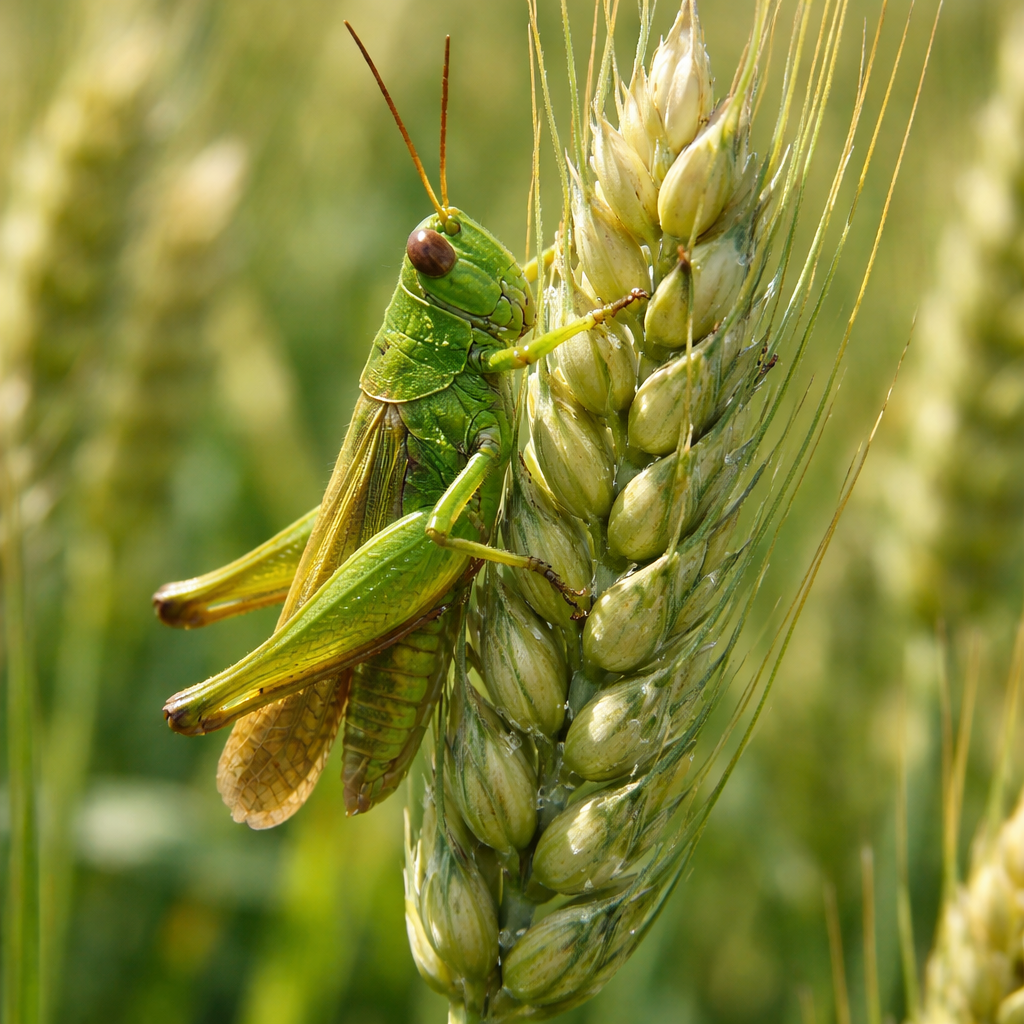
Grasshoppers — Family: Acrididae
Size: ~20–60 mm (0.8–2.4 in)
Grasshoppers are strong-jawed insects that chew leaves, stems, and sometimes fruit. In vegetable gardens, they cause large, irregular holes and can strip plants rapidly when populations are high. Grasshoppers feed during the day and are highly mobile, often moving in from surrounding fields, weeds, or unmanaged areas. Common host plants include corn, lettuce, beans, peppers, tomatoes, squash, and many herbs. Damage is classic chewing injury, with leaves missing large sections or entire margins. Young plants are especially vulnerable because even limited feeding can remove most of the leaf area. Grasshopper populations tend to increase during hot, dry summers, especially following mild winters. Because they are strong jumpers and fliers, they are difficult to exclude once established. Repeated feeding reduces plant vigor and yield, and heavy infestations can devastate gardens quickly if conditions favor population buildup.
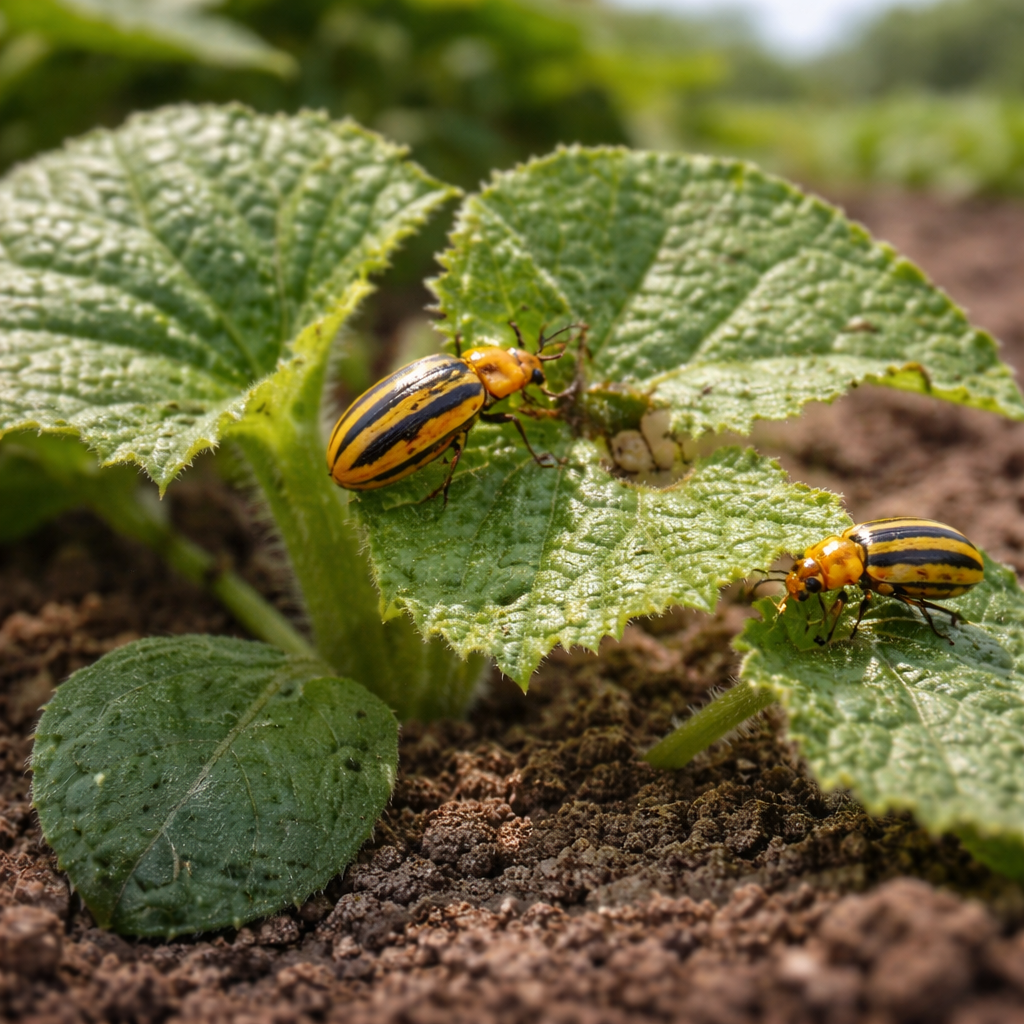
Cucumber Beetles — Genus: Acalymma spp.
Size: ~5–7 mm (0.2–0.28 in)
Cucumber beetles are small, brightly colored beetles that feed on cucurbit crops. Adults chew holes in leaves, flowers, and stems, while larvae feed on roots. In vegetable gardens, they primarily attack cucumbers, squash, melons, and pumpkins. Leaf feeding creates ragged holes that reduce photosynthesis, while root feeding weakens plants and causes wilting. Cucumber beetles are especially damaging early in the season when seedlings are small. Beyond feeding injury, they are known carriers of bacterial wilt, a disease that can kill plants rapidly. Feeding damage may seem minor at first, but disease transmission makes even small populations serious threats. Beetles are most active in warm weather and often appear shortly after plants emerge. Damage compounds over time, reducing yields and shortening the productive life of cucurbit vines.
Mexican Bean Beetles — Species: Epilachna varivestis
Size: ~6–7 mm (0.24–0.28 in)
Mexican bean beetles are relatives of lady beetles but feed on plants rather than pests. Both adults and larvae damage leaves by chewing tissue between veins, creating a skeletonized appearance. In vegetable gardens, they primarily attack beans, including snap beans, lima beans, and soybeans. Larvae are yellow and spiny, feeding openly on leaf surfaces. Damage reduces leaf area, weakens plants, and lowers pod production. Heavy infestations can completely defoliate bean plants, especially during warm weather. Unlike beneficial lady beetles, Mexican bean beetles persist and multiply rapidly if not controlled. Feeding injury slows growth and stresses plants, making them more susceptible to drought and disease. Damage is cumulative over the season, and repeated defoliation can drastically reduce yields. Gardeners often mistake early infestations for beneficial insects, allowing populations to build before damage becomes obvious.
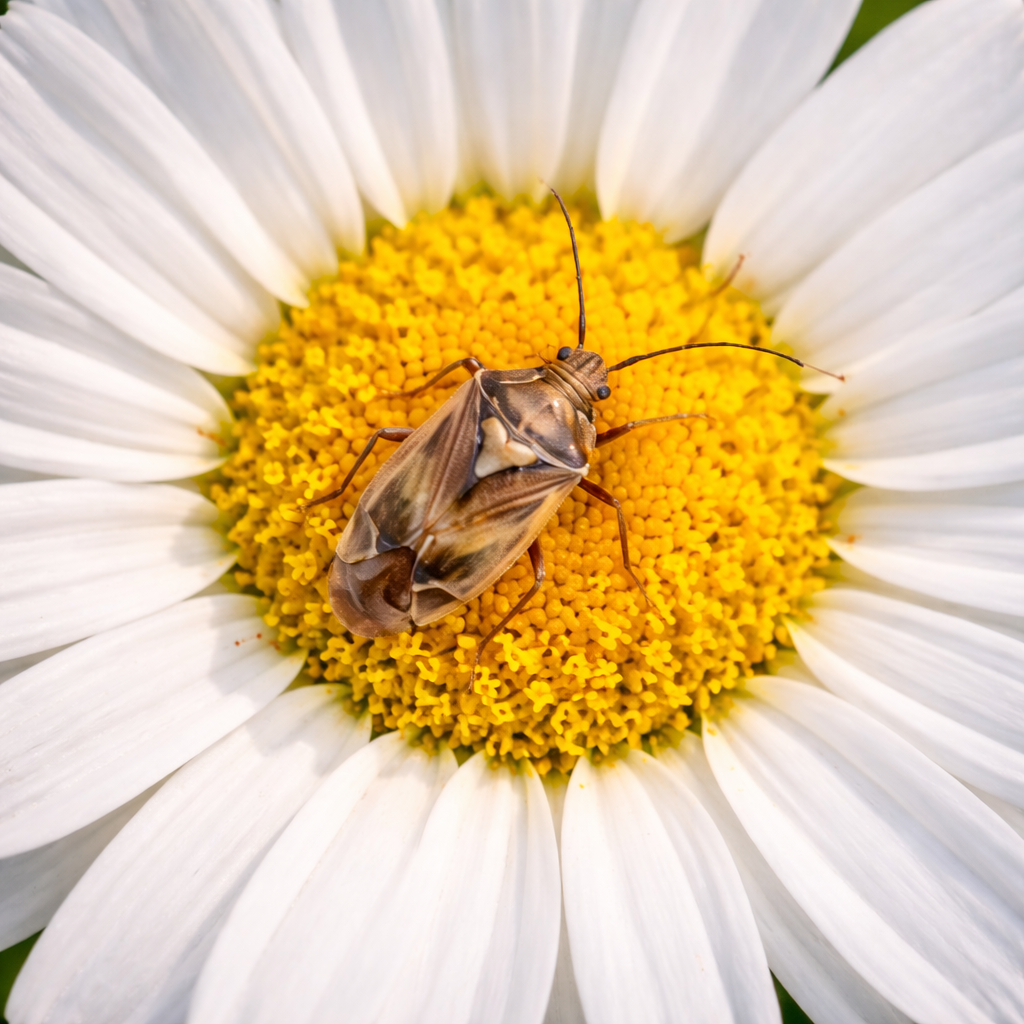
Tarnished Plant Bugs — Species: Lygus lineolaris
Size: ~5–6 mm (0.2–0.24 in)
Tarnished plant bugs are small, fast-moving insects that feed by piercing plant tissues and sucking sap. In vegetable gardens, they cause distorted growth, aborted flowers, and misshapen fruit. Common host plants include strawberries, tomatoes, peppers, beans, lettuce, and many herbs. Feeding damage often appears as deformed buds, scarred fruit, or small sunken spots. Tarnished plant bugs are highly mobile and move into gardens from surrounding weeds and grasses. Damage is often overlooked early because insects are difficult to spot. Unlike chewing pests, they weaken plants internally, leading to uneven growth and reduced yields. Feeding during flowering is especially damaging, as it interferes with pollination and fruit set. Warm weather favors population growth, and multiple generations may occur in a single season.
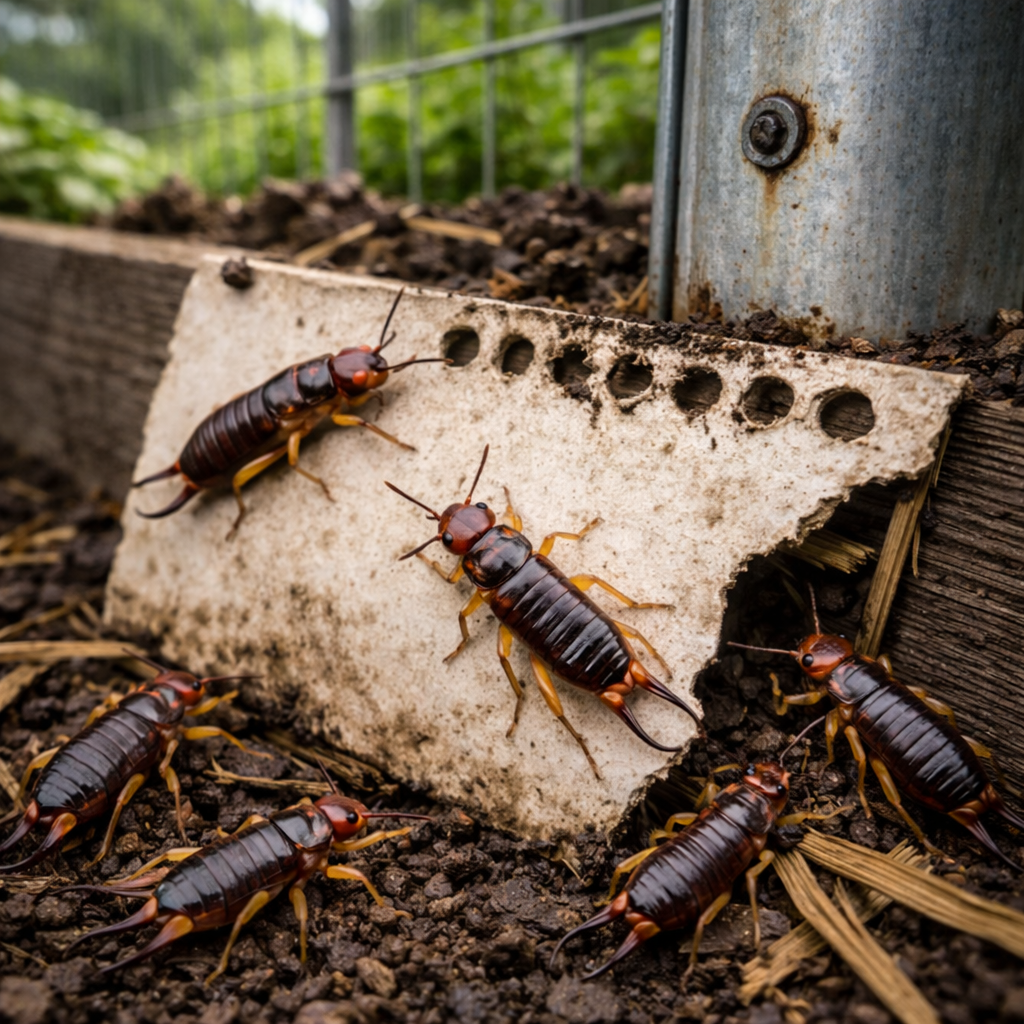
Earwigs — Genus: Forficula spp.
Size: ~12–16 mm (0.5–0.63 in)
Earwigs are nocturnal insects with distinctive pincers at the end of their abdomen. In vegetable gardens, they feed opportunistically on leaves, flowers, and soft fruits. Damage often appears as irregular holes or ragged edges, especially on lettuce, strawberries, peppers, and corn silk. Earwigs hide during the day in moist, dark places such as mulch, debris, and soil cracks. Feeding usually occurs at night, making damage seem sudden. While earwigs can consume other insects, their plant feeding becomes problematic when populations are high. Fruit damage is common where earwigs feed directly on ripening produce. Repeated feeding reduces crop quality rather than killing plants outright. Gardens with heavy mulch and frequent irrigation tend to harbor higher populations.
Pea Weevils — Species: Bruchus pisorum
Size: ~4–5 mm (0.16–0.2 in)
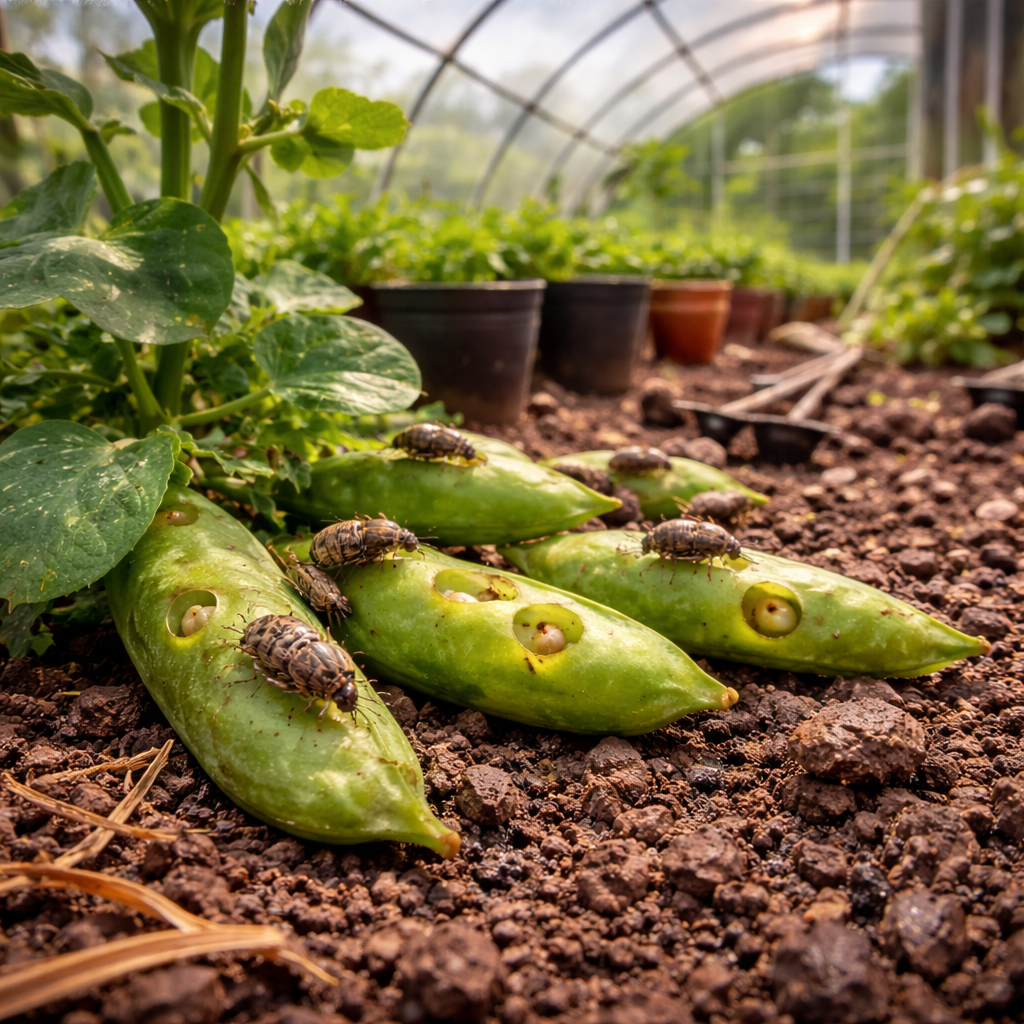
Pea weevils are small beetles that attack peas by laying eggs on developing pods. Larvae tunnel into seeds, feeding internally as peas mature. In vegetable gardens, damage is often unnoticed until harvest, when peas contain exit holes or internal feeding scars. While plants may appear healthy, seed quality and edibility are reduced. Pea weevils are most active during flowering and pod development. Damage affects stored peas as well, as larvae may continue development after harvest. Feeding does not reduce foliage significantly but compromises the harvested portion. Even light infestations can render peas unsuitable for storage or seed saving. Because damage is internal, prevention and early detection are critical to avoid crop loss.
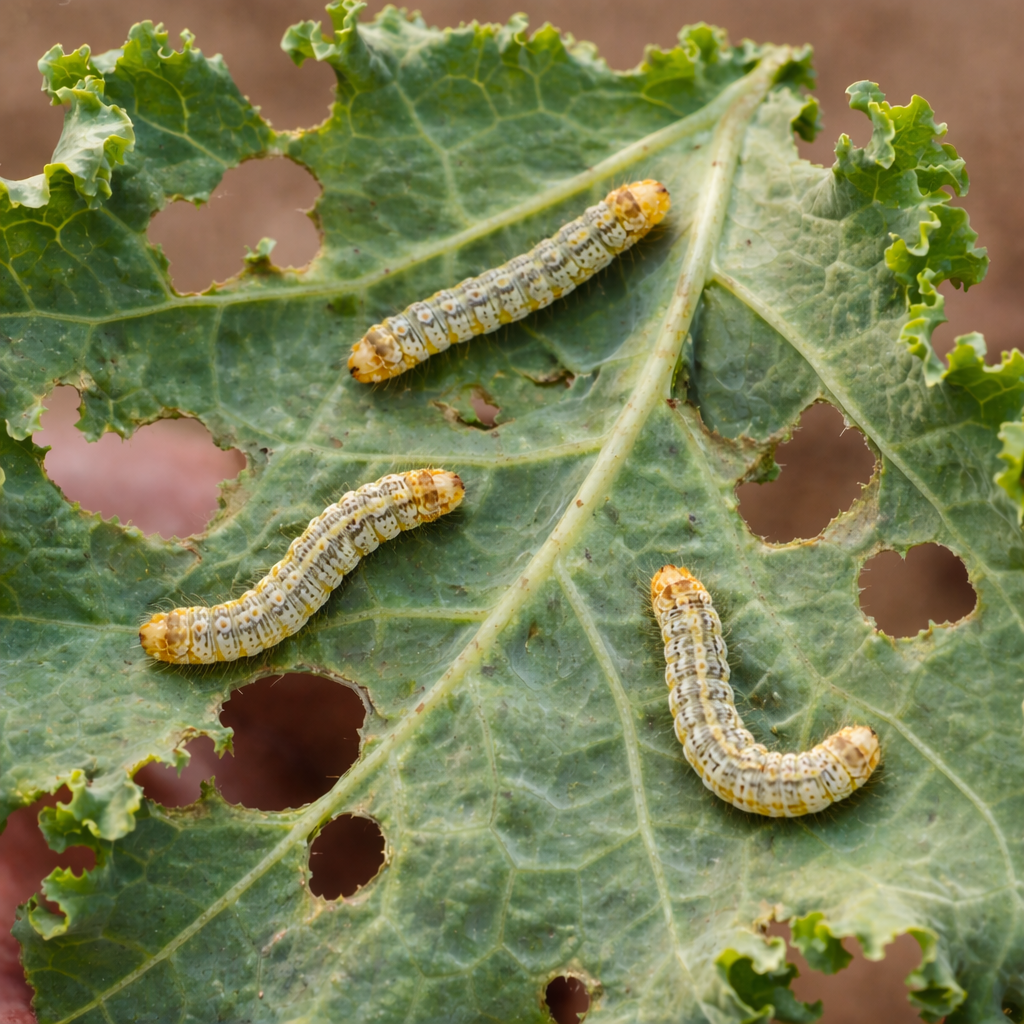
Sawfly Larvae — Family: Tenthredinidae
Size: ~10–25 mm (0.4–1 in)
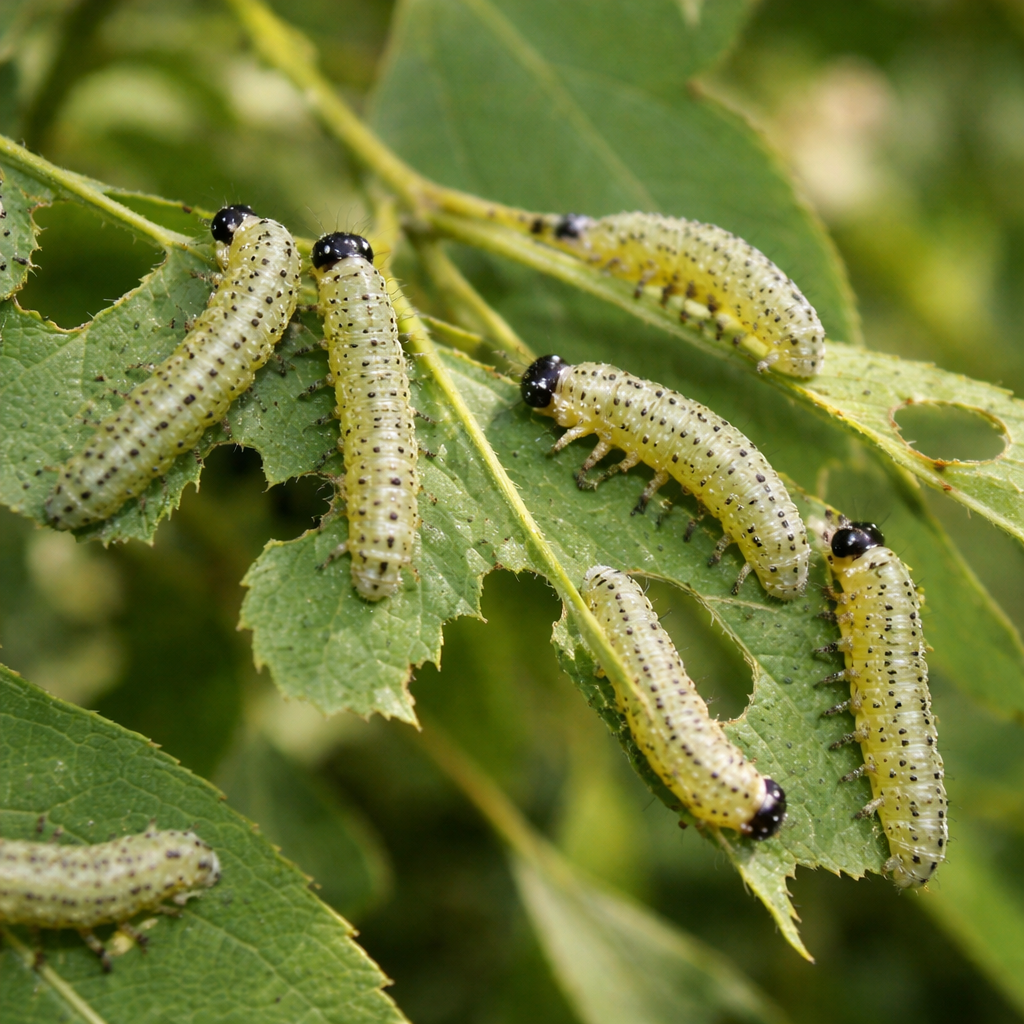
Sawfly larvae look like caterpillars but are actually the larval stage of wasp-like insects. In vegetable gardens, they chew leaves aggressively and can strip foliage quickly. Damage often appears suddenly because larvae feed in groups and consume leaf tissue from the edges inward. Common host plants include beans, potatoes, tomatoes, peppers, and many leafy greens. Unlike true caterpillars, sawfly larvae often raise their tails when disturbed and may feed openly during daylight hours. Chewing damage is obvious, with large sections of leaf missing. Young plants can be severely weakened if defoliation occurs early in the season. Repeated feeding reduces photosynthesis and slows growth, particularly in warm weather when larvae develop rapidly. Gardeners often misidentify sawfly larvae as harmless caterpillars and delay control, allowing populations to build. While plants may survive light feeding, heavy infestations reduce yields and stress plants during fruiting stages.
European Corn Borers — Species: Ostrinia nubilalis
Size: ~20–25 mm (0.8–1 in)
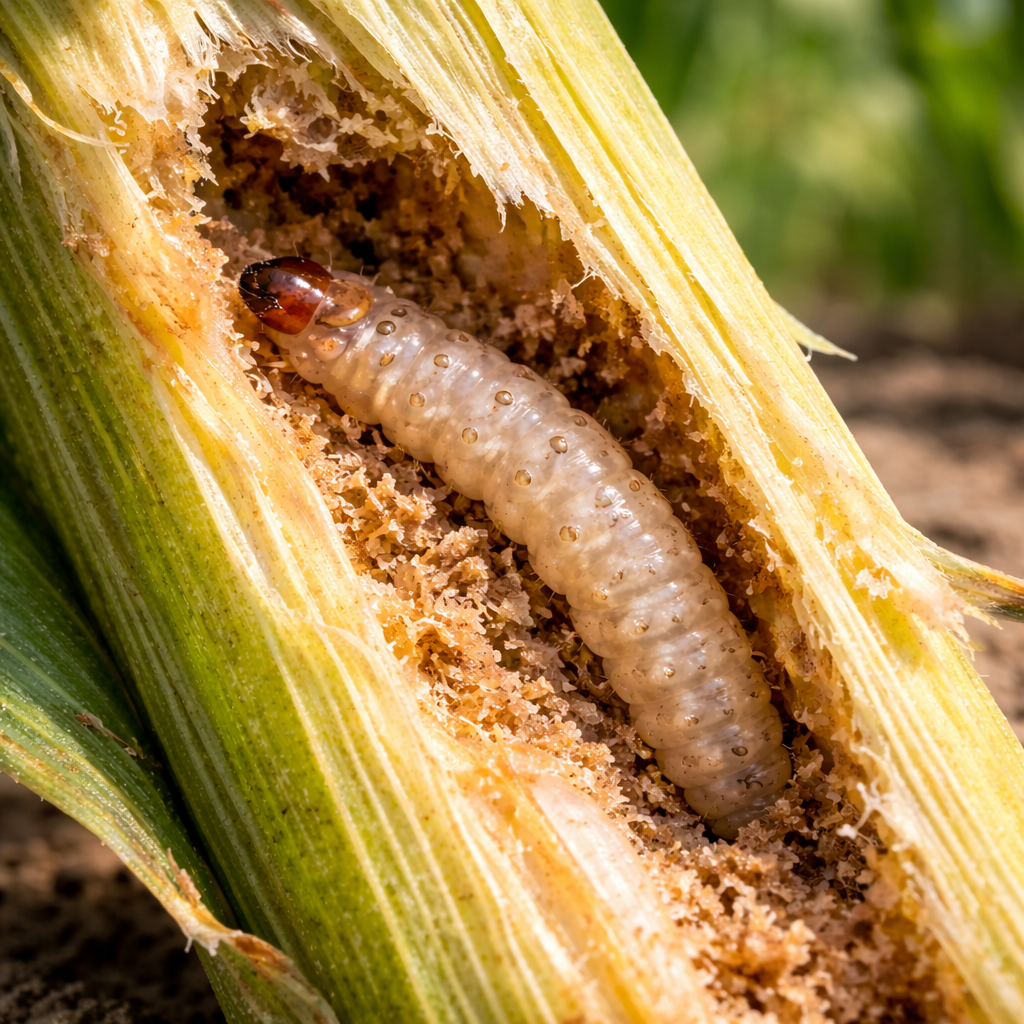
European corn borers are caterpillars that damage plants by boring into stems, stalks, and fruiting structures. In vegetable gardens, they commonly attack corn, peppers, tomatoes, beans, and potatoes. Larvae tunnel inside plant tissues, weakening stems and disrupting nutrient flow. Damage may cause plants to wilt, lodge, or break, even when foliage looks relatively intact. Entry holes are often small, making infestations difficult to detect early. Internal feeding reduces yield and opens pathways for rot and disease organisms. Corn ears may show feeding damage near tips or along kernels. Because larvae are protected inside stems and fruit, damage can continue unnoticed for weeks. Infestations are most common during warm summers when moth activity peaks. Plants stressed by drought or poor nutrition are more susceptible to injury. Even moderate infestations can cause significant losses due to structural damage rather than leaf loss.
Fruit Flies (Spotted Wing) — Species: Drosophila suzukii
Size: ~2–3 mm (0.08–0.12 in)
Spotted wing drosophila is a small fruit fly that attacks ripening fruit rather than overripe or decaying produce. In vegetable gardens, it primarily damages tomatoes and soft-skinned fruits grown alongside vegetables, such as berries. Females lay eggs inside ripening fruit, and larvae feed internally, causing soft spots and rapid decay. Damage often appears just before harvest, making it especially frustrating. Fruits may collapse, leak juice, or develop mold shortly after picking. Because larvae are hidden inside fruit, infestations can spread quickly before being noticed. Spotted wing drosophila thrives in warm, humid conditions and can reproduce rapidly. Unlike common fruit flies, this species attacks healthy fruit still on the plant. Damage reduces harvest quality and shelf life. Even small populations can cause significant losses if fruit is left on plants too long during peak activity periods.
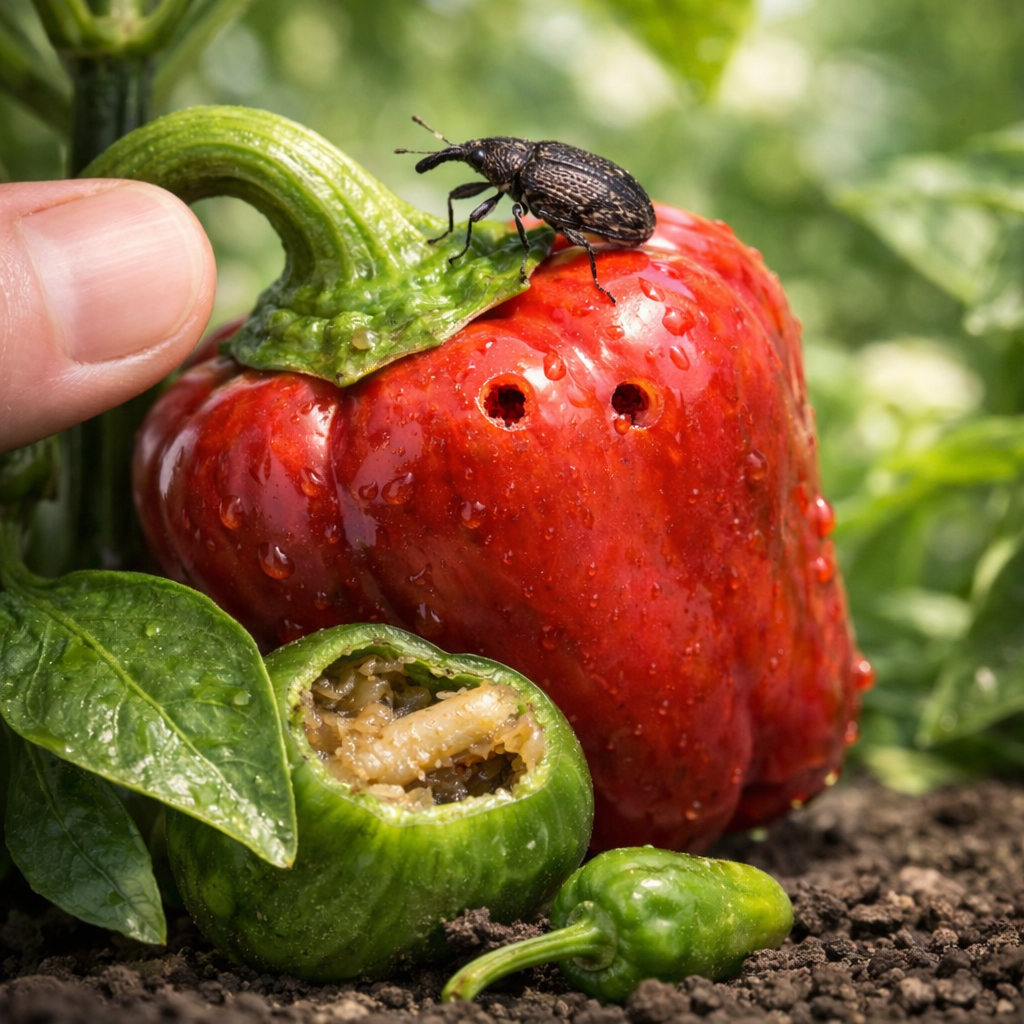
Pepper Weevils — Species: Anthonomus eugenii
Size: ~3–4 mm (0.12–0.16 in)
Pepper weevils are small beetles that damage pepper plants by feeding and laying eggs inside buds and developing fruit. In vegetable gardens, they are most destructive to peppers but may also attack eggplant. Larvae develop inside fruit, causing premature drop and internal feeding damage. Affected peppers may fall off the plant before ripening or show deformities. Adults feed on leaves, buds, and stems, but larval damage causes the most loss. Because feeding occurs inside fruit, infestations are difficult to detect until plants begin dropping blossoms and young peppers. Damage often peaks during warm weather when multiple generations overlap. Pepper weevils can significantly reduce yields even when plant foliage appears healthy. Infested fruit is unmarketable and often rots quickly. Early infestations are especially damaging because they limit fruit set for the rest of the season.
Root-Knot Nematodes — Genus: Meloidogyne spp.
Size: Microscopic (not visible to eye)
Root-knot nematodes are microscopic roundworms that live in soil and attack plant roots. In vegetable gardens, they cause swollen galls on roots, which disrupt water and nutrient uptake. Above-ground symptoms include stunted growth, yellowing, wilting during heat, and poor yields. Common host plants include tomatoes, peppers, beans, cucumbers, squash, carrots, and many herbs. Damage is often uneven, with patches of weak plants scattered throughout the garden. Because nematodes are invisible without magnification, gardeners often misdiagnose the problem as nutrient deficiency or drought stress. Root damage reduces plant vigor and limits fruit production. Plants may survive but perform poorly all season. Warm soil temperatures favor nematode activity, making damage worse in summer gardens. Once established, populations persist in soil and affect successive plantings if host crops are grown repeatedly.
Vine Borers — Species: Melittia cucurbitae
Size: ~25–30 mm larvae (1–1.2 in)
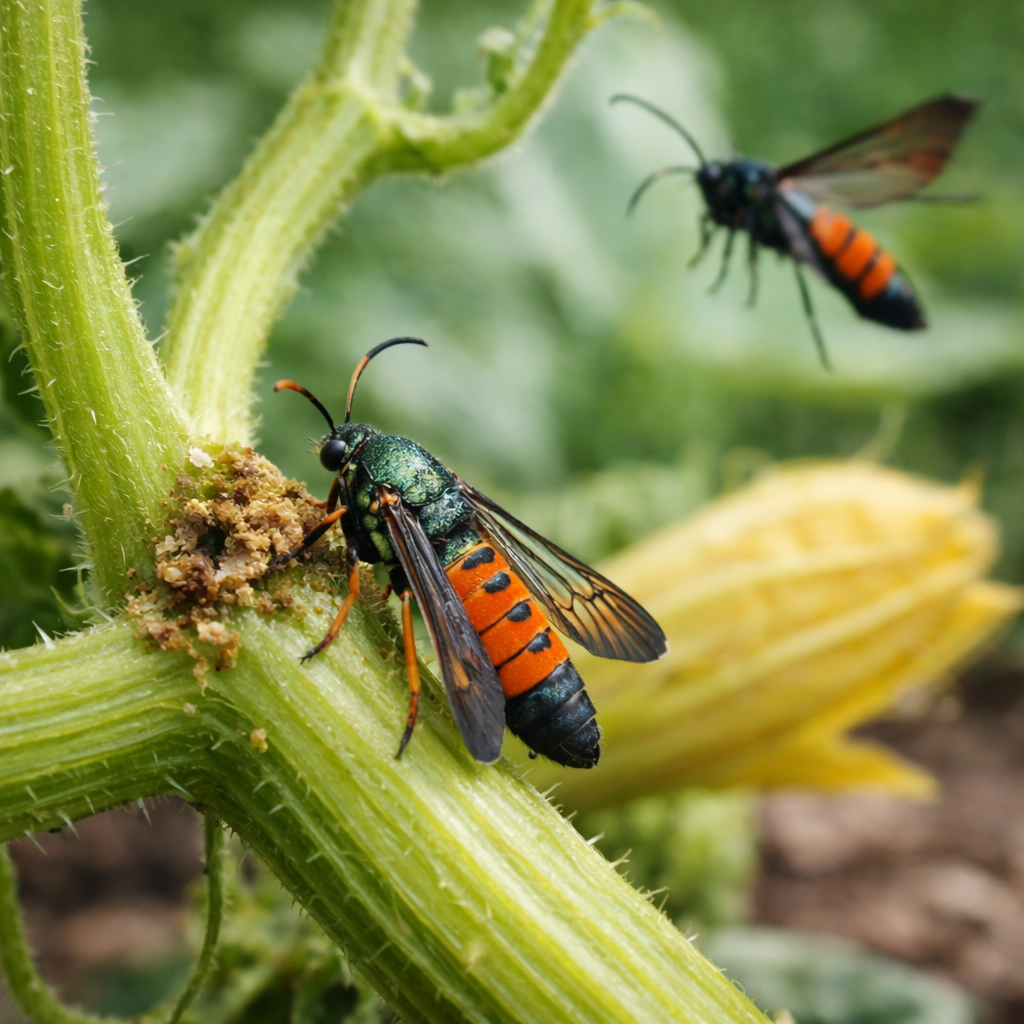
Squash vine borers are caterpillars that tunnel into the stems of squash and pumpkin plants. Damage often appears suddenly as vines wilt despite adequate water. Larvae feed inside stems, disrupting water flow and causing rapid collapse of affected vines. In vegetable gardens, summer squash, zucchini, pumpkins, and gourds are most vulnerable. Entry holes may ooze sawdust-like frass, which is a key sign of infestation. Once larvae are inside stems, damage progresses quickly. Plants may produce fruit initially, then decline rapidly as feeding intensifies. Vine borers are most active in early to mid-summer when adult moths lay eggs near the base of plants. Damage reduces yields significantly and can kill young plants outright. Because feeding is internal, infestations are difficult to manage once symptoms appear.
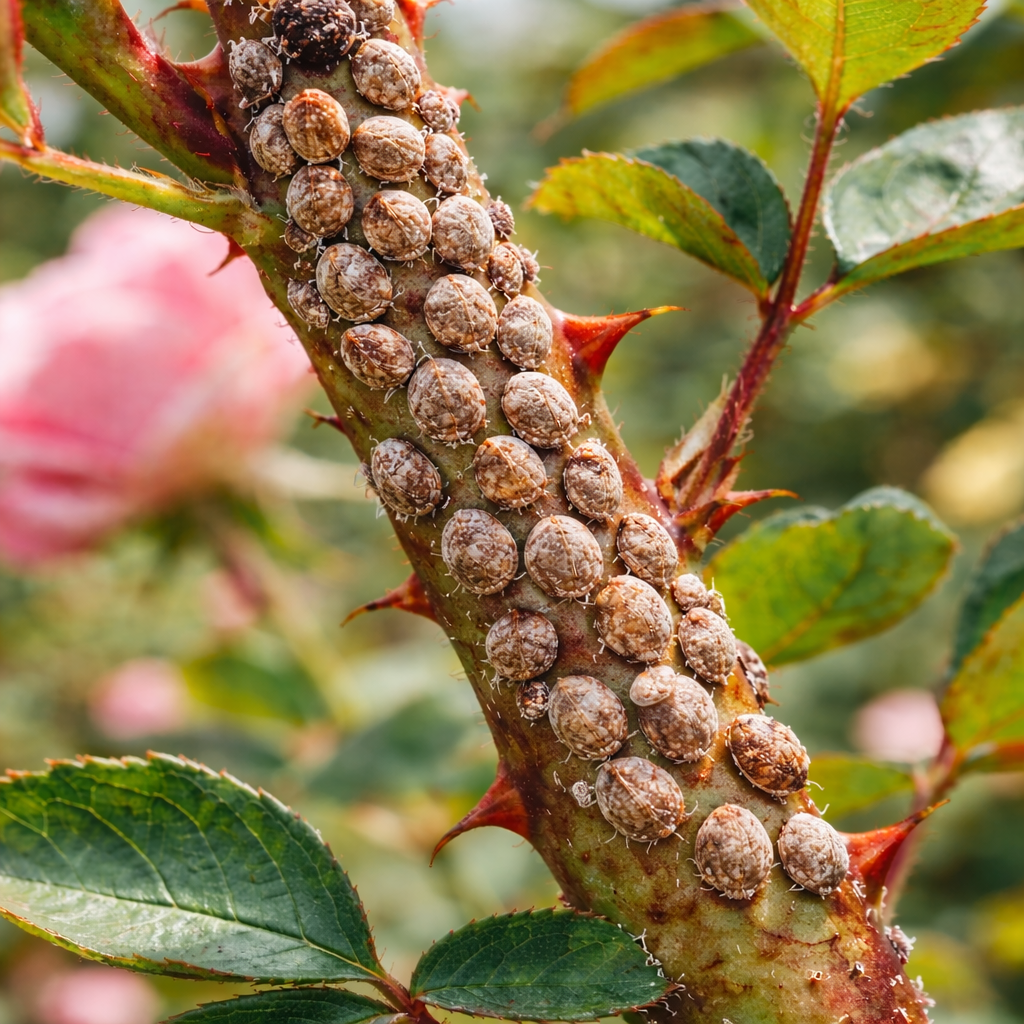
Scale Insects — Family: Coccidae
Size: ~2–6 mm (0.08–0.24 in)
Scale insects are small, immobile pests that attach themselves to stems and leaves, appearing as raised bumps rather than insects. In vegetable gardens, scale is more common on peppers, tomatoes, eggplant, and perennial herbs. They feed by sucking sap, weakening plants over time. Infested plants may show yellowing, leaf drop, and reduced growth. Like aphids, scale insects produce honeydew, leading to sticky leaves and sooty mold. Because scales blend into plant tissue, infestations often go unnoticed until plant decline becomes obvious. Damage builds gradually rather than suddenly. Heavy infestations can weaken plants enough to reduce flowering and fruit production. Warm, sheltered growing areas favor scale development. Once established, scales are difficult to remove because protective coverings shield them from environmental stress.
Blister Beetles — Family: Meloidae
Size: ~10–25 mm (0.4–1 in)
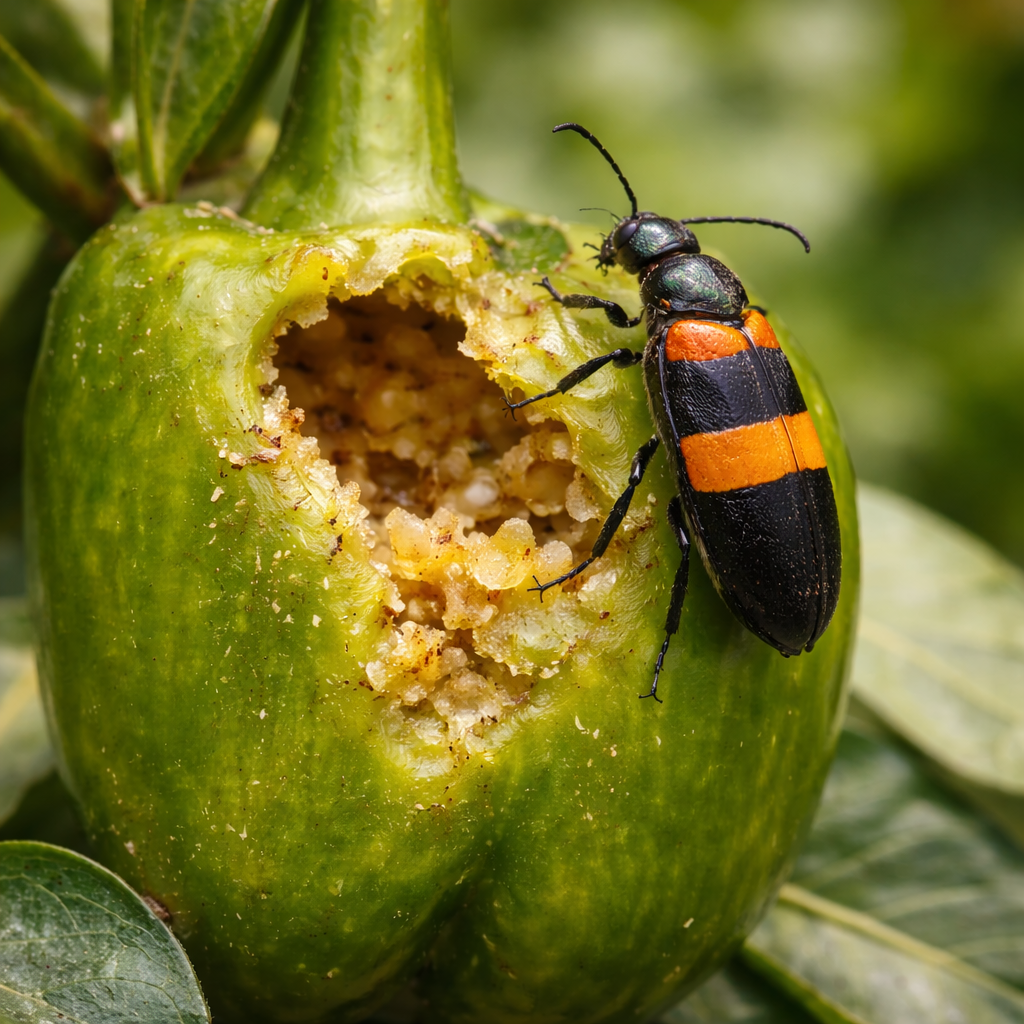
Blister beetles are elongated beetles that chew leaves and flowers, often feeding in clusters. In vegetable gardens, they commonly attack tomatoes, peppers, potatoes, beans, and alfalfa grown nearby. Damage appears as sudden defoliation or missing flower parts. Beetles are often gray, black, or striped and may drop to the ground when disturbed. Feeding can escalate quickly when groups move through a planting. In addition to feeding damage, blister beetles contain a toxin that can irritate skin if crushed. Plants may tolerate light feeding, but heavy infestations remove large amounts of foliage and reduce yields. Blister beetles are more common during hot, dry summers and often migrate from nearby fields. Damage is direct chewing injury, with leaves disappearing rapidly over short periods.
Loopers — Genus: Trichoplusia spp.
Size: ~25–30 mm (1–1.2 in)
Loopers are caterpillars named for their looping movement as they crawl. In vegetable gardens, they chew holes in leaves and feed along edges, leaving ragged damage. Common host plants include cabbage, broccoli, lettuce, tomatoes, peppers, and beans. Loopers are green and blend easily into foliage, making them hard to spot until damage accumulates. Feeding often begins on lower leaves and spreads upward. While individual caterpillars consume modest amounts, populations can build quickly in warm weather. Damage reduces leaf area and slows growth, especially in leafy crops. Loopers are most active during summer and early fall. Plants may survive light feeding, but repeated defoliation lowers yields and stresses crops during fruit development.
Army Cutworms — Species: Euxoa auxiliaris
Size: ~30–45 mm (1.2–1.8 in)
Army cutworms are caterpillars that feed on leaves and stems, often emerging at night. Unlike typical cutworms that sever stems, army cutworms chew foliage and may climb plants to feed. In vegetable gardens, they attack lettuce, cabbage, peas, beans, and various seedlings. Damage appears as missing leaf tissue and ragged edges. Infestations often follow weather patterns that favor moth migration. Army cutworms hide in soil during the day, making them hard to detect until damage is visible. Feeding reduces plant vigor and slows growth, particularly in young crops. Heavy infestations can strip leaves quickly and reduce yields. Damage is chewing injury and can resemble caterpillar feeding from other species, making identification important for management.
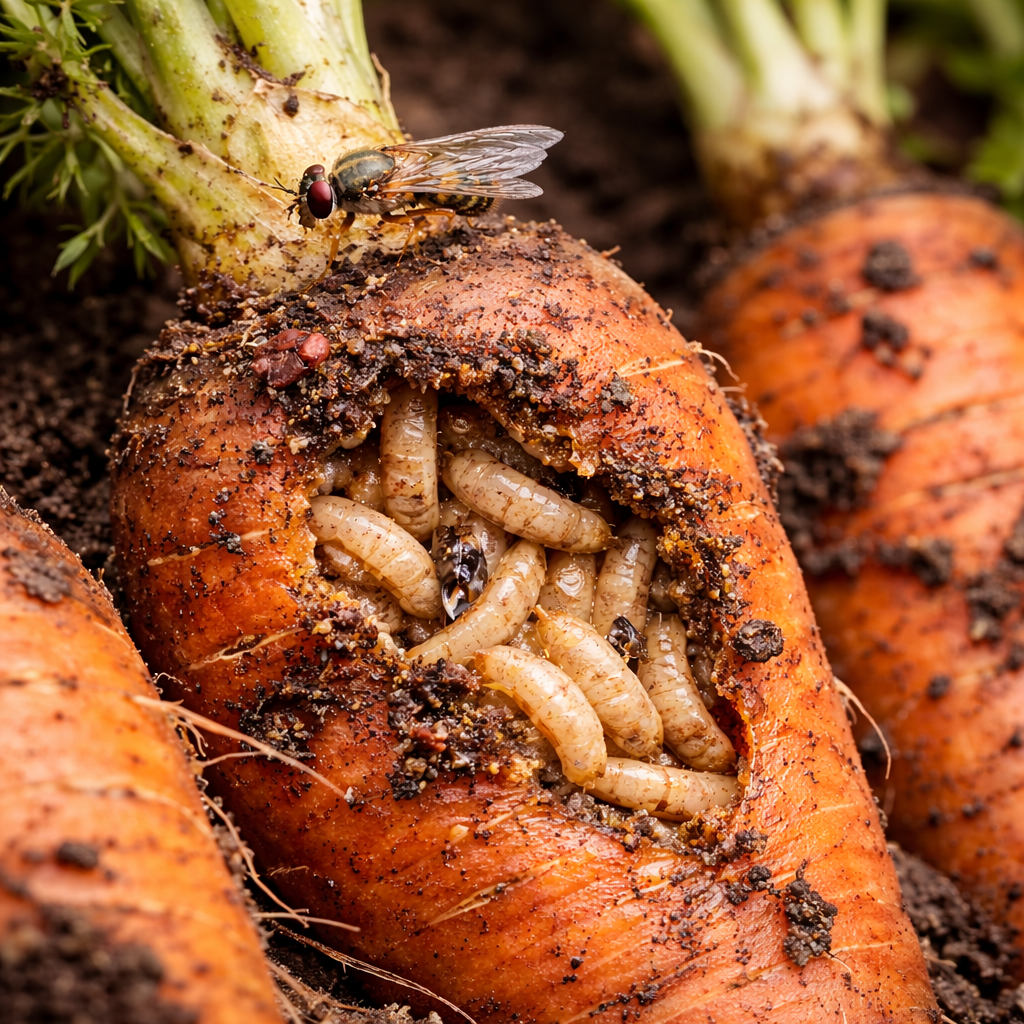
Carrot Rust Fly — Species: Psila rosae
Size: ~6–8 mm larvae (0.25–0.3 in)
Carrot rust flies cause damage during their larval stage, which feeds directly on roots below the soil surface. In vegetable gardens, carrots are the primary target, but parsnips, celery, and parsley are also affected. Adult flies lay eggs near the base of plants, and larvae tunnel into developing roots, creating winding brown channels. These tunnels cause carrots to become bitter, discolored, and unsuitable for fresh eating or storage. Because feeding occurs underground, damage often goes unnoticed until harvest. Above-ground symptoms are subtle and may include slow growth or slight yellowing. Infested roots are more vulnerable to secondary rot and decay. Damage is most common in cool, moist conditions, especially in spring and fall plantings. Once larvae are inside roots, control is difficult. Even light infestations can significantly reduce crop quality. Gardeners often discover the problem only when pulling carrots, making prevention and timing especially important for this pest.
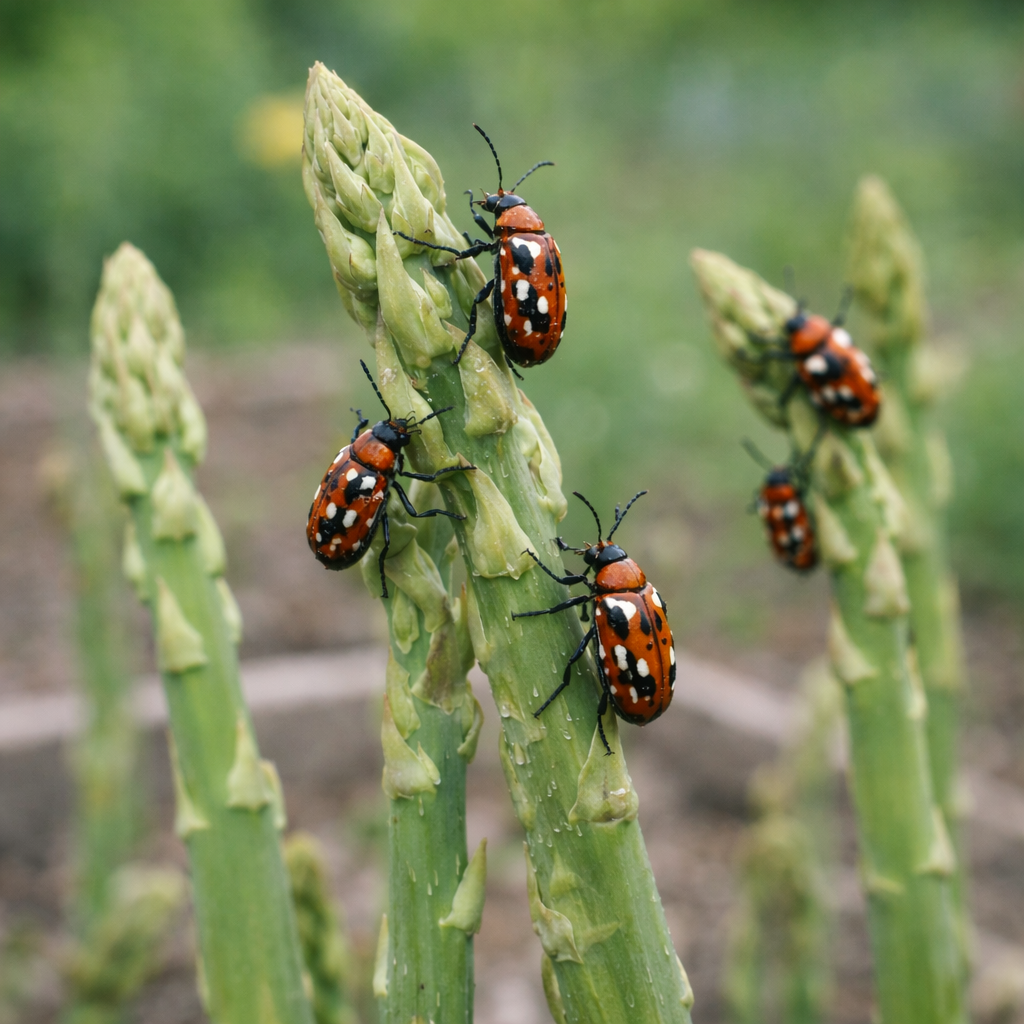
Asparagus Beetles — Genus: Crioceris spp.
Size: ~6–7 mm (0.24–0.28 in)
Asparagus beetles are small, brightly colored beetles that specialize in feeding on asparagus plants. Both adults and larvae cause damage by chewing foliage, stems, and developing spears. Adult feeding creates irregular notches along spear tips, while larvae consume soft foliage, leading to a ragged appearance. Damage weakens plants by reducing their ability to produce energy during the critical fern stage. Heavy feeding over multiple seasons can reduce spear size and overall yield. Eggs are laid on spears and foliage, allowing populations to build quickly if unchecked. Damage is most severe in spring and early summer, when plants are actively growing. Because asparagus is a perennial crop, repeated infestations can weaken crowns over time. Chewing injury is visible and cumulative, and plants stressed by poor nutrition or drought suffer more severely. Even moderate infestations reduce long-term productivity.
Brassica Aphids — Species: Brevicoryne brassicae
Size: ~2–3 mm (0.08–0.12 in)
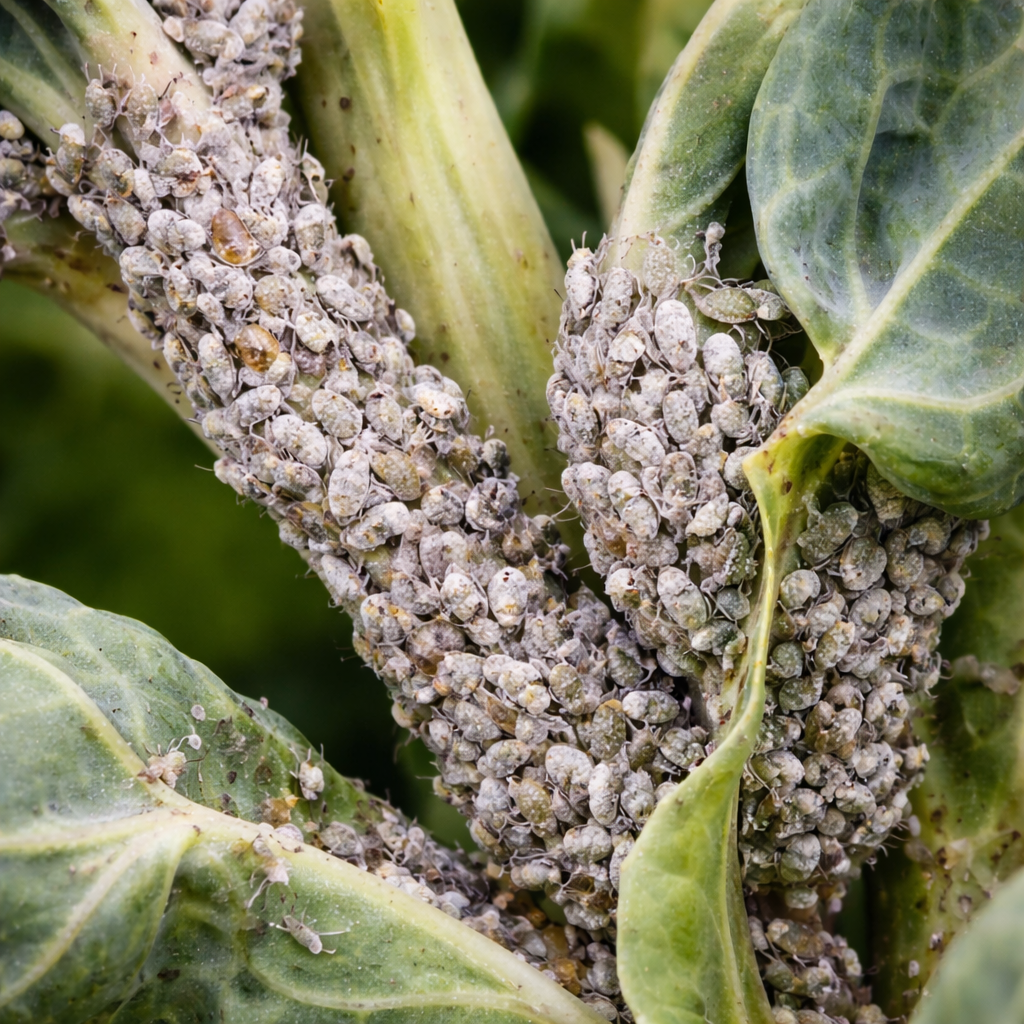
Brassica aphids are a specialized aphid species that primarily attacks cabbage-family crops. They appear gray-green due to a waxy coating and form dense colonies on leaf undersides and within developing heads. Feeding causes leaves to curl inward, turn yellow, and develop distorted growth. In vegetable gardens, cabbage, broccoli, cauliflower, kale, and Brussels sprouts are common hosts. Heavy infestations contaminate produce with aphids and sticky residue, making crops unmarketable. Like other aphids, brassica aphids produce honeydew that promotes sooty mold growth. Damage is especially problematic in cool weather, when populations expand rapidly. Plants may survive but produce smaller heads and reduced yields. Feeding weakens plants internally and interferes with normal growth. Because colonies hide deep in leaf folds, infestations often go unnoticed until harvest time, when removal becomes difficult.
Pepper Maggots — Species: Zonosemata electa
Size: ~7–9 mm larvae (0.28–0.35 in)
Pepper maggots are fly larvae that develop inside pepper fruit. Adult flies lay eggs beneath the skin of developing peppers, and larvae tunnel through the flesh as they feed. Damage often appears as soft spots, premature fruit drop, or internal rot. In vegetable gardens, bell peppers and hot peppers are most commonly affected. External signs may be minimal, making infestations hard to detect until fruit is cut open. Feeding damage reduces fruit quality and invites secondary decay. Maggots complete development inside fruit, then exit to pupate in soil. Damage typically peaks in mid to late summer. Even a small number of larvae can ruin a harvest, as affected fruit cannot be salvaged. Plants may appear healthy while fruit quality declines. Because larvae are protected inside fruit, management is most effective before eggs hatch.
Mole Crickets — Family: Gryllotalpidae
Size: ~25–35 mm (1–1.4 in)
Mole crickets are burrowing insects that damage plants by tunneling through soil and feeding on roots. Their activity disrupts root systems, causing seedlings and young plants to wilt, yellow, or die. In vegetable gardens, they affect tomatoes, peppers, beans, squash, and many seedlings. Damage is often uneven, with patches of poor growth scattered across beds. Tunneling loosens soil around roots, reducing water uptake and stability. Mole crickets are most active in warm, moist soils and feed primarily at night. Because damage occurs below ground, infestations are often misdiagnosed as watering or nutrient problems. Repeated tunneling weakens plants even when feeding is minimal. Established plants may survive but grow poorly and produce less. Gardens with sandy or loose soils are particularly susceptible to mole cricket activity.
Sweet Potato Weevils — Species: Cylas formicarius
Size: ~6–8 mm (0.24–0.3 in)
Sweet potato weevils are destructive pests that attack both vines and storage roots. Adults lay eggs in stems or roots, and larvae tunnel through plant tissue as they feed. Damage causes internal rot, bitterness, and strong odors that make roots inedible. In vegetable gardens, sweet potatoes are the primary host, but infestations can spread quickly through plantings. Feeding weakens vines and reduces root development. Damage often becomes apparent during harvest, when roots show extensive internal tunneling. Infested roots may also attract secondary decay organisms. Weevils are most active in warm climates and persist through multiple generations in a season. Because larvae develop inside plant tissue, infestations are difficult to control once established. Even light infestations can render an entire crop unsuitable for consumption or storage.
Cabbage Maggots — Species: Delia radicum
Size: ~6–8 mm larvae (0.25–0.3 in)
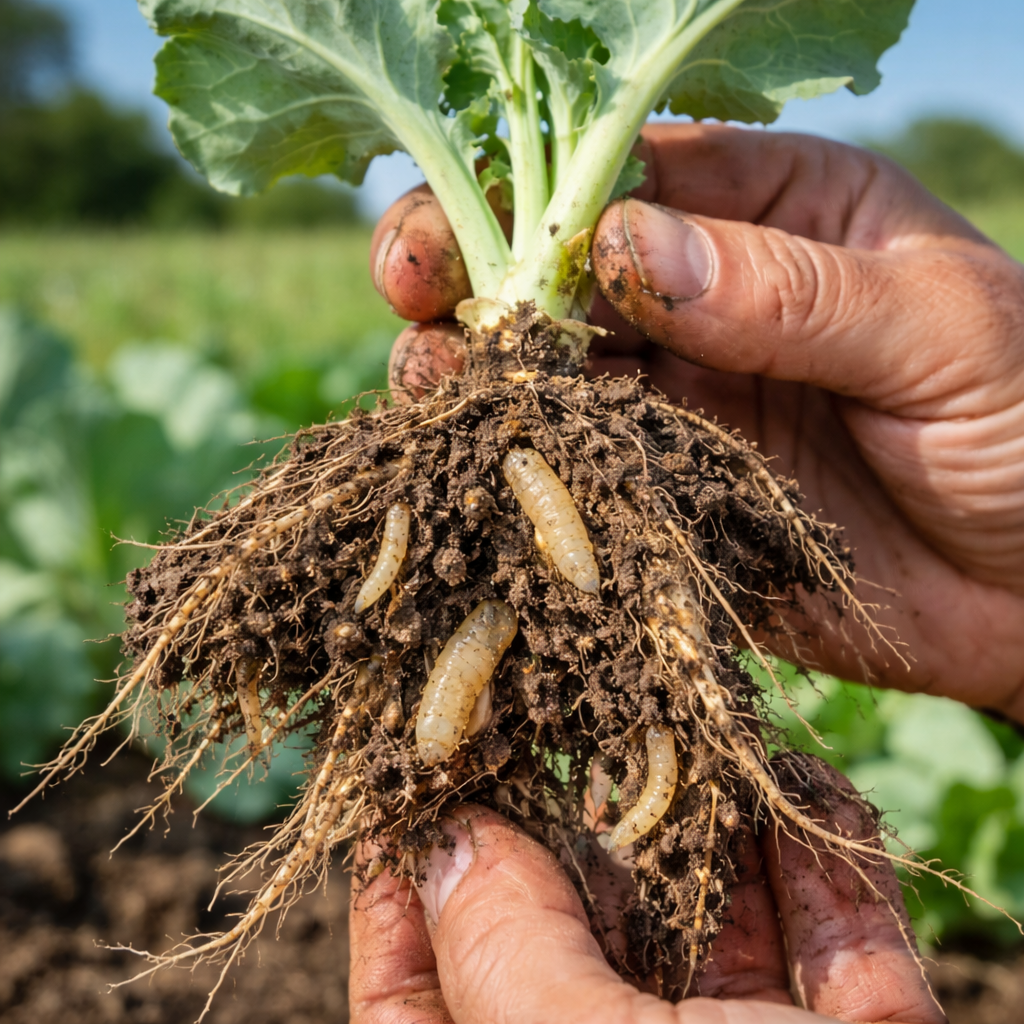
Cabbage maggots are fly larvae that feed on the roots of brassica crops. In vegetable gardens, they damage cabbage, broccoli, cauliflower, radishes, turnips, and kale. Larvae tunnel into roots, reducing water and nutrient uptake. Affected plants may wilt, grow poorly, or collapse entirely. Damage is most severe in cool, moist conditions during spring and fall. Because feeding occurs below ground, infestations are often detected only after plants decline. Root damage also encourages secondary rot. Even moderate infestations can reduce yields significantly, especially for root crops like radishes. Plants that survive often remain stunted. Cabbage maggots are particularly damaging to young transplants, which lack the root mass to recover from feeding injury.
Leaf-Footed Bugs — Genus: Leptoglossus spp.
Size: ~15–20 mm (0.6–0.8 in)
Leaf-footed bugs are large insects with flattened hind legs that resemble leaves. They feed by piercing fruits and stems and sucking plant juices. In vegetable gardens, they commonly attack tomatoes, peppers, squash, beans, and fruiting crops. Feeding causes sunken spots, misshapen fruit, and internal corky tissue. Damage often becomes visible as fruit matures. Leaf-footed bugs are highly mobile and often migrate from nearby weeds or orchards. Feeding does not remove tissue but weakens fruit internally, reducing quality and shelf life. Warm weather favors activity, and multiple generations may occur. Because they are strong fliers, infestations can persist throughout the season. Repeated feeding lowers yields and produces visually unappealing harvests.
White Grubs — Family: Scarabaeidae (larvae)
Size: ~20–40 mm (0.8–1.6 in)
White grubs are the larval stage of beetles such as June beetles and chafer beetles. They live in soil and feed on roots, damaging plants by reducing water and nutrient uptake. In vegetable gardens, grubs affect corn, potatoes, tomatoes, beans, and many seedlings. Damage often appears as sudden wilting or poor growth despite adequate care. When soil is disturbed, grubs may be found curled in a C-shape. Feeding weakens plants gradually, making them more vulnerable to drought stress. Because grubs live underground, infestations are difficult to detect early. Damage can persist over multiple seasons, as larvae remain in soil for extended periods. Even moderate populations reduce plant vigor and yields.
Flea Weevils — Genus: Smicronyx spp.
Size: ~2–3 mm (0.08–0.12 in)
Flea weevils are small beetles that combine jumping behavior with chewing damage. In vegetable gardens, they feed on leaves and stems, creating small holes similar to flea beetle damage. Host plants include peppers, tomatoes, beans, and leafy greens. Feeding is most damaging to seedlings, which may be severely weakened or killed. Adults chew foliage, while larvae may feed inside plant tissue. Damage slows growth and reduces early plant establishment. Flea weevils are most active in warm conditions and often appear suddenly. Because of their small size, infestations may be overlooked until damage accumulates. Repeated feeding reduces leaf area and stresses plants during critical growth stages.
Aphids — Genus: Aphis spp.
Size: ~1–4 mm (0.04–0.16 in)
Aphids are small, soft-bodied insects that gather in tight clusters on tender new growth, leaf undersides, and flower buds. Colors vary, but green is most common; you may also see black, yellow, or brown forms. In vegetable gardens, aphids feed by sucking sap, which leads to curled leaves, puckering, yellowing, and slowed growth. New transplants and seedlings can be set back fast because aphids prefer the softest tissue. Aphids also create a sticky coating called honeydew that attracts ants and can lead to black sooty mold on leaves, which blocks sunlight and reduces plant energy. Common host plants include tomatoes, peppers, beans, lettuce, brassicas, squash, cucumbers, and many herbs. You’ll often notice ants “farming” aphids, which is a clue the colony is established. Aphids don’t usually leave holes; damage looks like distortion, shine, and general weakening. When populations rise, flower set can drop and fruit size can suffer, especially in warm spells and over-fertilized, lush growth.
Spider Mites — Genus: Tetranychus spp.
Size: ~0.4–0.5 mm (0.016–0.02 in)
Spider mites are extremely tiny sap-feeders related to spiders and ticks, and they often explode during hot, dry weather. They feed by piercing leaf cells and removing contents, creating fine yellow stippling that gradually turns leaves dull, bronzed, or scorched. Because they are so small, gardeners often notice the plant symptoms first: leaves lose color, look dusty, then dry and drop early. In heavier infestations, you may see thin webbing on leaf undersides and between stems—especially on tomatoes, beans, cucumbers, squash, peppers, eggplant, strawberries, and many ornamentals. Spider mites thrive when plants are stressed by heat, low humidity, or inconsistent watering. Damage is not holes; it’s a “faded” look that spreads from lower leaves upward. Yield drops because the plant can’t photosynthesize efficiently. Mites also spread quickly from plant to plant when foliage touches. Catching them early matters, because once webbing is visible, populations are usually high and recovery is slower.
Whiteflies — Genus: Bemisia spp. (most commonly B. tabaci)
Size: ~0.9–1.4 mm (0.035–0.055 in)
Whiteflies look like tiny white moths and usually live on the undersides of leaves. A classic sign is that adults lift off in a small “white cloud” when you brush the plant. They feed by sucking sap, which weakens plants and causes leaf yellowing, droop, and drop, especially on tomatoes, peppers, beans, squash, cucumbers, eggplant, citrus, ornamentals, and many houseplants. Like aphids, whiteflies produce sticky honeydew that coats leaves, attracts ants, and encourages sooty mold. In vegetable gardens, whitefly pressure is often worst in warm weather and in sheltered spots with dense foliage or poor airflow. Damage is not chewing holes; instead, plants look tired, pale, and less productive. Fruit set can decline because stressed plants stop pushing strong new growth. Whiteflies can be persistent because multiple life stages are present at the same time, and the immature stages stay attached to the leaf. If you’re seeing sticky leaves plus clouds of tiny white insects, you’re usually dealing with an established population that needs steady follow-through.
Thrips — Genus: Frankliniella spp.
Size: ~1–2 mm (0.04–0.08 in)
Thrips are slender, fast-moving insects that feed by scraping the surface of leaves and flowers and then sucking up plant fluids. The result is a distinctive “silvery” or bronzed streaking rather than holes. New leaves may look distorted or crinkled, and flower petals can appear scarred, spotted, or deformed. In vegetable gardens, thrips commonly hit onions, tomatoes, peppers, beans, squash, lettuce, strawberries, and many ornamentals. They tend to be worse during warm, dry weather, and they build quickly in dense plantings or protected growing areas. Because thrips feed inside buds and flowers, they can be hard to spot until damage is already visible. Another clue is tiny black specks (their droppings) on leaves or petals. Thrips injury can reduce fruit quality and can cause blossoms to drop or fail, which directly lowers yields. Damage often appears patchy at first—one plant or one part of a plant—then spreads. Thrips don’t chew chunks out; instead they “sandpaper” the surface, leaving a dull shine and weakened tissue that can dry out in heat.
Cabbage Worms — Species: Pieris rapae (imported cabbageworm)
Size: ~25–30 mm (1–1.2 in)
Cabbage worms are smooth green caterpillars that blend into leafy greens, making them easy to miss until damage is obvious. They chew ragged holes in leaves, often starting on the undersides, and they can burrow into developing heads where they contaminate produce with dark droppings. In home vegetable gardens, cabbage worms are most common on cabbage, broccoli, cauliflower, kale, collards, and Brussels sprouts. Damage can move quickly because caterpillars feed daily and can strip large areas of leaf tissue, reducing the plant’s ability to grow strong heads or side shoots. Look for irregular holes, missing leaf edges, and frass (small dark pellets) lodged in leaf folds. Plants may still survive, but yield and quality drop fast when feeding is heavy. Cabbage worms are usually worst in cooler seasons—spring and fall—when brassicas are actively growing. Unlike sap-feeders, this is direct chewing damage: leaf area disappears, and the crop can become unmarketable. Even a “light” infestation can ruin the harvest if caterpillars are feeding inside heads where washing can’t reach.
Flea Beetles — Genus: Phyllotreta spp.
Size: ~1.5–3 mm (0.06–0.12 in)
Flea beetles are tiny, hard-bodied beetles that jump like fleas when disturbed. Their feeding creates many small, round holes that look like “shot-holes,” especially on young leaves. Seedlings and transplants are the most vulnerable, because a small insect can remove a large percentage of leaf area relative to the plant’s size. In vegetable gardens, flea beetles commonly attack eggplant, tomatoes, peppers, potatoes, radishes, arugula, and brassicas. Damage is often worst in spring when plants are small and beetles are active. You may see leaves that look peppered with holes, or thin, shredded areas where holes merge. Mature plants can sometimes outgrow light feeding, but repeated injury slows growth and reduces harvest timing. Flea beetles cause chewing damage, not sap-sucking distortion. If you watch closely on a sunny day, you may see small dark or metallic beetles hopping away. Stress from drought or heat can make the impact worse because plants can’t replace leaf tissue quickly. When seedlings stall early, later yields often suffer even if plants recover visually.
Squash Bugs — Species: Anasa tristis
Size: ~14–16 mm (0.55–0.63 in)
Squash bugs are large, flat, brown insects that feed with piercing mouthparts on stems and leaves of cucurbits. Their feeding disrupts water movement and injects toxic saliva, which causes leaves to wilt, yellow, and sometimes die back even when soil moisture is adequate. In vegetable gardens, squash bugs primarily attack squash, pumpkins, zucchini, and melons. A common pattern is sudden wilting on one vine or one section of a plant, followed by collapse if pressure is high. Eggs are typically laid in clusters on leaf undersides, and the nymphs (young stages) feed in groups, which accelerates damage. Unlike chewing pests, squash bugs don’t remove chunks of leaf; they weaken the plant from the inside. Plants under stress—hot weather, poor airflow, crowded vines—tend to suffer more. Damage can reduce fruit set and fruit quality, and severe infestations can kill young plants outright. If you find the egg clusters early and remove them consistently, you can prevent the mid-season population surge that turns a manageable issue into a crop failure.
Japanese Beetles — Species: Popillia japonica
Size: ~10–12 mm (0.4–0.5 in)
Japanese beetles are metallic green beetles with copper-brown wing covers, and they often feed in groups. Their signature damage is “skeletonizing” leaves—eating the tissue between veins and leaving a lace-like pattern. In vegetable gardens, they commonly hit beans, corn, tomatoes, grapes, berries, fruit trees, and many ornamentals. Because they aggregate, damage can appear suddenly and severe on a favorite plant while nearby plants look fine. Peak feeding is usually mid-summer, and repeated defoliation weakens plants, reduces yield, and can slow recovery during hot weather. This is chewing damage, not sap-feeding distortion. Leaves may look like a net, with veins intact but most green tissue gone. Flowers can also be damaged, and fruit can be scarred. Even if plants survive, heavy leaf loss reduces photosynthesis and can shrink fruit size or reduce overall production. When you see multiple beetles on one leaf, that’s often the start of a bigger wave, because feeding attracts more beetles to the same plant.
Leafminers — Genus: Liriomyza spp.
Size: Larvae ~2–3 mm (0.08–0.12 in)
Leafminers are larvae that live and feed inside leaves, creating winding, pale trails that look like scribbles. The tunnels are made as the larva eats the inner leaf tissue while the outer layers remain mostly intact. In vegetable gardens, leafminer damage is common on spinach, beets, chard, lettuce, tomatoes, and some ornamentals. Light mining is mostly cosmetic, but heavy mining reduces photosynthesis and can weaken plants, especially leafy crops where the leaf is the harvest. Leaves may yellow, dry at the edges, or look dirty and unusable for salads. Because the feeding is inside the leaf, you won’t see classic holes, and spraying the leaf surface doesn’t always reach the pest stage that’s doing the damage. Mines often start as thin lines and widen as the larva grows. Young plants can be set back if many leaves are mined at once. In warm conditions, generations can overlap, so you may see new fresh mines while older ones dry out, giving plants a patchy, tired look and reducing overall garden quality.
Cutworms — Family: Noctuidae (various species)
Size: ~25–50 mm (1–2 in)
Cutworms are thick caterpillars that hide in soil or under debris during the day and feed at night. Their most frustrating behavior is cutting seedlings off at the base, often right at soil level, which makes healthy young plants collapse overnight. In vegetable gardens, cutworms commonly damage tomatoes, peppers, corn, beans, cabbage-family crops, and many direct-seeded vegetables. The pattern is usually sudden: one morning the stem is severed and the plant is laying on the ground nearby. Some cutworms also climb and chew leaves, but the classic injury is a clean “cut” stem. This is chewing damage, not sap-sucking. Cutworms are most common in spring and early summer, especially where weeds were recently turned under or where mulch and plant residue provide hiding spots. If you gently dig around the base of a cut seedling, you can often find the caterpillar curled in a C-shape within the top inch or two of soil. Even a few cutworms can wipe out a row of new transplants quickly.
Armyworms — Genus: Spodoptera spp.
Size: ~30–40 mm (1.2–1.6 in)
Armyworms are caterpillars known for sudden, destructive feeding that appears almost overnight. They earn their name because they move across garden beds in groups, consuming foliage as they go. In vegetable gardens, armyworms chew leaves aggressively, leaving ragged edges and stripped plants. Feeding is most intense during warm weather, especially late spring through summer. Young larvae may skeletonize leaves, while older larvae consume entire leaf sections. Common host plants include corn, tomatoes, peppers, beans, lettuce, onions, and many leafy greens. Damage often begins on lower leaves and moves upward as caterpillars grow. Armyworms hide in soil or plant debris during the day and feed mostly at night, making early detection difficult. Plants may look fine one evening and heavily damaged the next morning. Heavy infestations can defoliate crops rapidly, reducing yield and stressing plants during critical growth stages. Because feeding is direct chewing, damage is obvious and cumulative. Stressed or fertilized plants with lush growth often attract higher pressure.
Corn Earworms — Species: Helicoverpa zea
Size: ~25–45 mm (1–1.8 in)
Corn earworms are caterpillars that primarily target developing fruits rather than leaves. In vegetable gardens, they are notorious for boring into corn ears, tomatoes, peppers, and beans. Larvae chew directly into fruits, contaminating them with frass and internal feeding damage. Entry holes may be small, but internal damage can be extensive. Corn earworms vary in color, often green, brown, or striped, making them hard to spot. Feeding reduces marketable yield and often invites secondary rot and disease. In tomatoes, a single larva can ruin multiple fruits as it moves from one to another. Damage is most common in mid to late summer when moth populations peak. Because larvae are protected inside fruits, control becomes more difficult once they enter. Plants may look healthy from a distance, but harvested produce reveals internal feeding. Corn earworms are especially frustrating because damage appears late, after plants have invested most of their energy into fruit production.
Stink Bugs — Genus: Euschistus spp.
Size: ~12–17 mm (0.5–0.7 in)
Stink bugs are shield-shaped insects that feed using piercing-sucking mouthparts. In vegetable gardens, they damage fruits by puncturing skins and feeding on internal tissues. This causes corky spots, deformities, and uneven ripening. Tomatoes, peppers, beans, corn, okra, and fruiting vegetables are frequent targets. Damage may not be obvious immediately but becomes visible as fruits mature and show sunken or discolored areas. Stink bugs are often most active in warm weather and migrate from nearby weeds or field edges into gardens. They tend to hide during the day and feed quietly, making infestations easy to overlook. Feeding does not cause holes; instead, fruit quality suffers internally. Repeated feeding weakens plants and reduces usable harvest. Because stink bugs are mobile and long-lived, populations can persist throughout the season. Gardeners often notice them when harvesting damaged produce rather than during active feeding.
Harlequin Bugs — Species: Murgantia histrionica
Size: ~7–10 mm (0.28–0.4 in)
Harlequin bugs are brightly colored stink bug relatives that primarily attack brassica crops. Their striking red, black, and orange markings make them easy to identify. In vegetable gardens, they feed by piercing leaves and stems, sucking sap and injecting toxic saliva. This causes pale spots that merge into larger areas of yellowing, wilting, and plant collapse. Cabbage, kale, broccoli, cauliflower, mustard greens, and collards are common hosts. Feeding damage often begins on leaf margins and spreads inward. Heavy infestations can kill young plants outright. Harlequin bugs thrive in warm weather and can produce multiple generations in a season. Eggs are laid in neat clusters on leaf undersides, allowing populations to build quickly if unchecked. Damage is more severe during summer heat when plants are already stressed. Unlike chewing insects, harlequin bugs weaken plants internally, leading to stunted growth and reduced head formation in brassicas.
Colorado Potato Beetles — Species: Leptinotarsa decemlineata
Size: ~10–12 mm (0.4–0.5 in)
Colorado potato beetles are easily recognized by their yellow-and-black striped wing covers. Both adults and larvae feed heavily on foliage, making them one of the most destructive pests of potatoes. They also attack tomatoes, eggplant, and peppers. Larvae are reddish-orange and consume leaves rapidly, often stripping plants to bare stems if populations are high. Damage is most severe in warm weather when multiple generations overlap. Defoliation reduces photosynthesis, delays tuber development, and significantly lowers yields. Plants may survive light feeding, but repeated defoliation weakens them severely. Eggs are laid in clusters on leaf undersides, and larvae feed openly during the day. Because feeding is visible and aggressive, infestations escalate quickly. In small gardens, beetles can overwhelm crops if not managed early. Damage is classic chewing injury, with leaves disappearing rapidly during peak feeding periods.
Leafhoppers — Genus: Empoasca spp.
Size: ~3–4 mm (0.12–0.16 in)
Leafhoppers are small, wedge-shaped insects that move quickly when disturbed. They feed by piercing leaves and sucking sap, causing a condition known as “hopperburn.” Symptoms include leaf curling, yellowing at edges, browning, and eventual leaf drop. In vegetable gardens, leafhoppers commonly affect beans, potatoes, tomatoes, eggplant, lettuce, and strawberries. Damage often starts subtly, with pale leaf margins that gradually darken and dry. Leafhoppers thrive in warm conditions and migrate into gardens from surrounding vegetation. Feeding weakens plants and reduces yields, especially during dry periods. Unlike chewing insects, leafhoppers leave no holes, making damage harder to diagnose early. Heavy infestations reduce plant vigor and slow growth. Because they are highly mobile, populations can spread quickly across a garden. Leafhoppers are also known to transmit certain plant diseases, increasing their overall impact on crop health.
Root Maggots — Genus: Delia spp.
Size: ~6–8 mm larvae (0.25–0.3 in)
Root maggots are fly larvae that feed underground on plant roots and stems. In vegetable gardens, they are serious pests of radishes, turnips, onions, cabbage, broccoli, and cauliflower. Damage occurs below the soil surface, making early detection difficult. Affected plants may wilt, grow poorly, or collapse despite adequate water. Roots often show tunnels, decay, or complete destruction when pulled up. Feeding reduces nutrient uptake and weakens plants during early growth stages. Root maggots are most damaging in cool, moist conditions, especially spring and fall. Adult flies lay eggs near the soil surface, and larvae move directly into roots after hatching. Because damage is hidden, gardeners often discover infestations only after plants fail. Yield losses can be significant, particularly for root crops where the edible portion is directly damaged.
Tomato Hornworms — Species: Manduca quinquemaculata
Size: ~75–100 mm (3–4 in)
Tomato hornworms are large green caterpillars that blend remarkably well into tomato foliage. Despite their size, they are often overlooked until significant damage appears. Hornworms chew large sections of leaves, stems, and sometimes green fruit. Feeding can defoliate plants rapidly, leaving only bare stems behind. In vegetable gardens, they primarily attack tomatoes but also feed on peppers, eggplant, and potatoes. Damage is most severe in midsummer when larvae reach full size. Hornworms feed mostly at night and rest along stems during the day. Their droppings, which resemble dark pellets, are often the first sign of their presence. While a single hornworm can remove a surprising amount of foliage, plants may recover if damage is caught early. Severe defoliation, however, reduces fruit production and exposes fruit to sunscald.
Onion Maggots — Species: Delia antiqua
Size: ~6–8 mm larvae (0.25–0.3 in)
Onion maggots are fly larvae that attack onion-family crops by feeding at the base of plants and within bulbs. In vegetable gardens, they commonly damage onions, garlic, leeks, and shallots. Infested plants may wilt, yellow, and collapse suddenly. Bulbs often rot from the inside out, becoming soft and foul-smelling. Damage is most common in cool spring weather when adult flies are active. Because larvae feed below ground, infestations are difficult to detect until plants fail. Multiple larvae may attack a single bulb, accelerating decay. Onion maggots are especially destructive to seedlings and young transplants. Once bulbs are damaged, secondary rot organisms often take over, making crops unusable. Even small infestations can cause significant losses in onion plantings.
Mealybugs — Genus: Pseudococcus spp.
Size: ~3–5 mm (0.12–0.2 in)
Mealybugs are soft-bodied insects covered in a white, cottony wax that makes them easy to recognize. They feed by sucking sap from stems, leaf joints, and undersides of leaves. In vegetable gardens, mealybugs are more common on peppers, tomatoes, eggplant, herbs, and greenhouse-grown crops. Feeding causes yellowing, leaf drop, and reduced plant vigor. Like aphids, mealybugs excrete honeydew that attracts ants and promotes sooty mold. Infestations often start in protected areas where insects are shielded from predators. Because mealybugs move slowly and cluster tightly, populations can build unnoticed. Damage reduces plant energy and fruit production over time. Heavy infestations weaken plants significantly, especially in warm conditions where reproduction is rapid
Slugs — Genus: Deroceras spp.
Size: ~25–50 mm (1–2 in)
Slugs are soft-bodied, shell-less mollusks that feed primarily at night or during cool, damp conditions. In vegetable gardens, they chew large, irregular holes in leaves and can completely shred seedlings. Damage is often worst on young plants, where a single night of feeding can destroy an entire planting. Common host plants include lettuce, spinach, cabbage, kale, strawberries, beans, squash, and many ornamentals. A key sign of slug activity is the silvery slime trail left behind on soil, mulch, or leaves. Slugs thrive in moist environments with dense ground cover, heavy mulch, and shaded beds. Feeding damage is uneven and ragged, unlike the clean holes of insects. Plants may appear untouched during the day, then heavily damaged by morning. Slugs do not suck sap; they physically consume leaf tissue, reducing photosynthesis and slowing growth. Repeated feeding weakens plants and reduces yields, particularly in cool, wet seasons. Gardens with frequent irrigation or poor airflow often experience higher slug pressure.
Snails — Genus: Cornu spp.
Size: ~25–40 mm (1–1.6 in)
Snails are closely related to slugs but carry a hard shell, which offers protection from predators and drying conditions. Like slugs, they feed mostly at night and prefer moist, sheltered environments. In vegetable gardens, snails chew large holes in leaves, flowers, and sometimes fruit, leaving irregular edges and slime trails. They commonly attack lettuce, cabbage, kale, beans, peas, strawberries, and young seedlings. Damage can be severe on newly transplanted crops, which lack the leaf area to recover quickly. Snails hide under boards, mulch, stones, and dense foliage during the day. Feeding is direct chewing, not sap removal, and damage often starts near the soil line. Snail populations increase during wet weather and can persist throughout mild seasons. While adult plants may tolerate some feeding, repeated injury reduces vigor and harvest quality. Snails can be especially destructive in gardens with heavy organic mulch and limited disturbance, where hiding places are abundant.
Wireworms — Family: Elateridae (larvae)
Size: ~10–25 mm (0.4–1 in)
Wireworms are the larval stage of click beetles and live in the soil for extended periods. They are hard-bodied, slender, and coppery brown, resembling pieces of wire. In vegetable gardens, wireworms feed on seeds, roots, and underground stems, causing plants to wilt or fail to emerge. Crops commonly affected include potatoes, corn, carrots, beets, onions, and peas. Damage often appears as poor germination or sudden plant decline without obvious leaf injury. When harvested, root crops may show holes or tunnels caused by feeding larvae. Wireworms are most common in gardens converted from grass or pasture, where larvae were already established. Because they live underground, infestations are difficult to detect early. Feeding weakens plants by disrupting water and nutrient uptake. Damage can persist for multiple seasons because wireworms remain in the soil for years before maturing. Even low populations can cause noticeable losses in root and tuber crops.
Seedcorn Maggots — Species: Delia platura
Size: ~6–8 mm larvae (0.25–0.3 in)
Seedcorn maggots are fly larvae that feed on germinating seeds and young seedlings. In vegetable gardens, they are especially damaging to beans, corn, peas, cucumbers, melons, and squash. Damage occurs below the soil surface, where larvae hollow out seeds before they sprout or tunnel into emerging seedlings. Affected plants may fail to emerge or collapse shortly after breaking the soil surface. Seedcorn maggots are most active in cool, wet soil conditions, particularly in early spring. Gardens with high organic matter, recently incorporated manure, or decaying plant debris are more attractive to egg-laying flies. Because damage happens underground, gardeners often notice poor stands rather than visible feeding. Replanting may be necessary if losses are heavy. Once plants are established, seedcorn maggots are no longer a threat, but early-season damage can delay planting schedules and reduce yields significantly.
Grasshoppers — Family: Acrididae
Size: ~20–60 mm (0.8–2.4 in)
Grasshoppers are strong-jawed insects that chew leaves, stems, and sometimes fruit. In vegetable gardens, they cause large, irregular holes and can strip plants rapidly when populations are high. Grasshoppers feed during the day and are highly mobile, often moving in from surrounding fields, weeds, or unmanaged areas. Common host plants include corn, lettuce, beans, peppers, tomatoes, squash, and many herbs. Damage is classic chewing injury, with leaves missing large sections or entire margins. Young plants are especially vulnerable because even limited feeding can remove most of the leaf area. Grasshopper populations tend to increase during hot, dry summers, especially following mild winters. Because they are strong jumpers and fliers, they are difficult to exclude once established. Repeated feeding reduces plant vigor and yield, and heavy infestations can devastate gardens quickly if conditions favor population buildup.
Cucumber Beetles — Genus: Acalymma spp.
Size: ~5–7 mm (0.2–0.28 in)
Cucumber beetles are small, brightly colored beetles that feed on cucurbit crops. Adults chew holes in leaves, flowers, and stems, while larvae feed on roots. In vegetable gardens, they primarily attack cucumbers, squash, melons, and pumpkins. Leaf feeding creates ragged holes that reduce photosynthesis, while root feeding weakens plants and causes wilting. Cucumber beetles are especially damaging early in the season when seedlings are small. Beyond feeding injury, they are known carriers of bacterial wilt, a disease that can kill plants rapidly. Feeding damage may seem minor at first, but disease transmission makes even small populations serious threats. Beetles are most active in warm weather and often appear shortly after plants emerge. Damage compounds over time, reducing yields and shortening the productive life of cucurbit vines.
Mexican Bean Beetles — Species: Epilachna varivestis
Size: ~6–7 mm (0.24–0.28 in)
Mexican bean beetles are relatives of lady beetles but feed on plants rather than pests. Both adults and larvae damage leaves by chewing tissue between veins, creating a skeletonized appearance. In vegetable gardens, they primarily attack beans, including snap beans, lima beans, and soybeans. Larvae are yellow and spiny, feeding openly on leaf surfaces. Damage reduces leaf area, weakens plants, and lowers pod production. Heavy infestations can completely defoliate bean plants, especially during warm weather. Unlike beneficial lady beetles, Mexican bean beetles persist and multiply rapidly if not controlled. Feeding injury slows growth and stresses plants, making them more susceptible to drought and disease. Damage is cumulative over the season, and repeated defoliation can drastically reduce yields. Gardeners often mistake early infestations for beneficial insects, allowing populations to build before damage becomes obvious.
Tarnished Plant Bugs — Species: Lygus lineolaris
Size: ~5–6 mm (0.2–0.24 in)
Tarnished plant bugs are small, fast-moving insects that feed by piercing plant tissues and sucking sap. In vegetable gardens, they cause distorted growth, aborted flowers, and misshapen fruit. Common host plants include strawberries, tomatoes, peppers, beans, lettuce, and many herbs. Feeding damage often appears as deformed buds, scarred fruit, or small sunken spots. Tarnished plant bugs are highly mobile and move into gardens from surrounding weeds and grasses. Damage is often overlooked early because insects are difficult to spot. Unlike chewing pests, they weaken plants internally, leading to uneven growth and reduced yields. Feeding during flowering is especially damaging, as it interferes with pollination and fruit set. Warm weather favors population growth, and multiple generations may occur in a single season.
Earwigs — Genus: Forficula spp.
Size: ~12–16 mm (0.5–0.63 in)
Earwigs are nocturnal insects with distinctive pincers at the end of their abdomen. In vegetable gardens, they feed opportunistically on leaves, flowers, and soft fruits. Damage often appears as irregular holes or ragged edges, especially on lettuce, strawberries, peppers, and corn silk. Earwigs hide during the day in moist, dark places such as mulch, debris, and soil cracks. Feeding usually occurs at night, making damage seem sudden. While earwigs can consume other insects, their plant feeding becomes problematic when populations are high. Fruit damage is common where earwigs feed directly on ripening produce. Repeated feeding reduces crop quality rather than killing plants outright. Gardens with heavy mulch and frequent irrigation tend to harbor higher populations.
Pea Weevils — Species: Bruchus pisorum
Size: ~4–5 mm (0.16–0.2 in)
Pea weevils are small beetles that attack peas by laying eggs on developing pods. Larvae tunnel into seeds, feeding internally as peas mature. In vegetable gardens, damage is often unnoticed until harvest, when peas contain exit holes or internal feeding scars. While plants may appear healthy, seed quality and edibility are reduced. Pea weevils are most active during flowering and pod development. Damage affects stored peas as well, as larvae may continue development after harvest. Feeding does not reduce foliage significantly but compromises the harvested portion. Even light infestations can render peas unsuitable for storage or seed saving. Because damage is internal, prevention and early detection are critical to avoid crop loss.
Sawfly Larvae — Family: Tenthredinidae
Size: ~10–25 mm (0.4–1 in)
Sawfly larvae look like caterpillars but are actually the larval stage of wasp-like insects. In vegetable gardens, they chew leaves aggressively and can strip foliage quickly. Damage often appears suddenly because larvae feed in groups and consume leaf tissue from the edges inward. Common host plants include beans, potatoes, tomatoes, peppers, and many leafy greens. Unlike true caterpillars, sawfly larvae often raise their tails when disturbed and may feed openly during daylight hours. Chewing damage is obvious, with large sections of leaf missing. Young plants can be severely weakened if defoliation occurs early in the season. Repeated feeding reduces photosynthesis and slows growth, particularly in warm weather when larvae develop rapidly. Gardeners often misidentify sawfly larvae as harmless caterpillars and delay control, allowing populations to build. While plants may survive light feeding, heavy infestations reduce yields and stress plants during fruiting stages.
European Corn Borers — Species: Ostrinia nubilalis
Size: ~20–25 mm (0.8–1 in)
European corn borers are caterpillars that damage plants by boring into stems, stalks, and fruiting structures. In vegetable gardens, they commonly attack corn, peppers, tomatoes, beans, and potatoes. Larvae tunnel inside plant tissues, weakening stems and disrupting nutrient flow. Damage may cause plants to wilt, lodge, or break, even when foliage looks relatively intact. Entry holes are often small, making infestations difficult to detect early. Internal feeding reduces yield and opens pathways for rot and disease organisms. Corn ears may show feeding damage near tips or along kernels. Because larvae are protected inside stems and fruit, damage can continue unnoticed for weeks. Infestations are most common during warm summers when moth activity peaks. Plants stressed by drought or poor nutrition are more susceptible to injury. Even moderate infestations can cause significant losses due to structural damage rather than leaf loss.
Fruit Flies (Spotted Wing) — Species: Drosophila suzukii
Size: ~2–3 mm (0.08–0.12 in)
Spotted wing drosophila is a small fruit fly that attacks ripening fruit rather than overripe or decaying produce. In vegetable gardens, it primarily damages tomatoes and soft-skinned fruits grown alongside vegetables, such as berries. Females lay eggs inside ripening fruit, and larvae feed internally, causing soft spots and rapid decay. Damage often appears just before harvest, making it especially frustrating. Fruits may collapse, leak juice, or develop mold shortly after picking. Because larvae are hidden inside fruit, infestations can spread quickly before being noticed. Spotted wing drosophila thrives in warm, humid conditions and can reproduce rapidly. Unlike common fruit flies, this species attacks healthy fruit still on the plant. Damage reduces harvest quality and shelf life. Even small populations can cause significant losses if fruit is left on plants too long during peak activity periods.
Pepper Weevils — Species: Anthonomus eugenii
Size: ~3–4 mm (0.12–0.16 in)
Pepper weevils are small beetles that damage pepper plants by feeding and laying eggs inside buds and developing fruit. In vegetable gardens, they are most destructive to peppers but may also attack eggplant. Larvae develop inside fruit, causing premature drop and internal feeding damage. Affected peppers may fall off the plant before ripening or show deformities. Adults feed on leaves, buds, and stems, but larval damage causes the most loss. Because feeding occurs inside fruit, infestations are difficult to detect until plants begin dropping blossoms and young peppers. Damage often peaks during warm weather when multiple generations overlap. Pepper weevils can significantly reduce yields even when plant foliage appears healthy. Infested fruit is unmarketable and often rots quickly. Early infestations are especially damaging because they limit fruit set for the rest of the season.
Root-Knot Nematodes — Genus: Meloidogyne spp.
Size: Microscopic (not visible to eye)
Root-knot nematodes are microscopic roundworms that live in soil and attack plant roots. In vegetable gardens, they cause swollen galls on roots, which disrupt water and nutrient uptake. Above-ground symptoms include stunted growth, yellowing, wilting during heat, and poor yields. Common host plants include tomatoes, peppers, beans, cucumbers, squash, carrots, and many herbs. Damage is often uneven, with patches of weak plants scattered throughout the garden. Because nematodes are invisible without magnification, gardeners often misdiagnose the problem as nutrient deficiency or drought stress. Root damage reduces plant vigor and limits fruit production. Plants may survive but perform poorly all season. Warm soil temperatures favor nematode activity, making damage worse in summer gardens. Once established, populations persist in soil and affect successive plantings if host crops are grown repeatedly.
Vine Borers — Species: Melittia cucurbitae
Size: ~25–30 mm larvae (1–1.2 in)
Squash vine borers are caterpillars that tunnel into the stems of squash and pumpkin plants. Damage often appears suddenly as vines wilt despite adequate water. Larvae feed inside stems, disrupting water flow and causing rapid collapse of affected vines. In vegetable gardens, summer squash, zucchini, pumpkins, and gourds are most vulnerable. Entry holes may ooze sawdust-like frass, which is a key sign of infestation. Once larvae are inside stems, damage progresses quickly. Plants may produce fruit initially, then decline rapidly as feeding intensifies. Vine borers are most active in early to mid-summer when adult moths lay eggs near the base of plants. Damage reduces yields significantly and can kill young plants outright. Because feeding is internal, infestations are difficult to manage once symptoms appear.
Scale Insects — Family: Coccidae
Size: ~2–6 mm (0.08–0.24 in)
Scale insects are small, immobile pests that attach themselves to stems and leaves, appearing as raised bumps rather than insects. In vegetable gardens, scale is more common on peppers, tomatoes, eggplant, and perennial herbs. They feed by sucking sap, weakening plants over time. Infested plants may show yellowing, leaf drop, and reduced growth. Like aphids, scale insects produce honeydew, leading to sticky leaves and sooty mold. Because scales blend into plant tissue, infestations often go unnoticed until plant decline becomes obvious. Damage builds gradually rather than suddenly. Heavy infestations can weaken plants enough to reduce flowering and fruit production. Warm, sheltered growing areas favor scale development. Once established, scales are difficult to remove because protective coverings shield them from environmental stress.
Blister Beetles — Family: Meloidae
Size: ~10–25 mm (0.4–1 in)
Blister beetles are elongated beetles that chew leaves and flowers, often feeding in clusters. In vegetable gardens, they commonly attack tomatoes, peppers, potatoes, beans, and alfalfa grown nearby. Damage appears as sudden defoliation or missing flower parts. Beetles are often gray, black, or striped and may drop to the ground when disturbed. Feeding can escalate quickly when groups move through a planting. In addition to feeding damage, blister beetles contain a toxin that can irritate skin if crushed. Plants may tolerate light feeding, but heavy infestations remove large amounts of foliage and reduce yields. Blister beetles are more common during hot, dry summers and often migrate from nearby fields. Damage is direct chewing injury, with leaves disappearing rapidly over short periods.
Loopers — Genus: Trichoplusia spp.
Size: ~25–30 mm (1–1.2 in)
Loopers are caterpillars named for their looping movement as they crawl. In vegetable gardens, they chew holes in leaves and feed along edges, leaving ragged damage. Common host plants include cabbage, broccoli, lettuce, tomatoes, peppers, and beans. Loopers are green and blend easily into foliage, making them hard to spot until damage accumulates. Feeding often begins on lower leaves and spreads upward. While individual caterpillars consume modest amounts, populations can build quickly in warm weather. Damage reduces leaf area and slows growth, especially in leafy crops. Loopers are most active during summer and early fall. Plants may survive light feeding, but repeated defoliation lowers yields and stresses crops during fruit development.
Army Cutworms — Species: Euxoa auxiliaris
Size: ~30–45 mm (1.2–1.8 in)
Army cutworms are caterpillars that feed on leaves and stems, often emerging at night. Unlike typical cutworms that sever stems, army cutworms chew foliage and may climb plants to feed. In vegetable gardens, they attack lettuce, cabbage, peas, beans, and various seedlings. Damage appears as missing leaf tissue and ragged edges. Infestations often follow weather patterns that favor moth migration. Army cutworms hide in soil during the day, making them hard to detect until damage is visible. Feeding reduces plant vigor and slows growth, particularly in young crops. Heavy infestations can strip leaves quickly and reduce yields. Damage is chewing injury and can resemble caterpillar feeding from other species, making identification important for management.
Carrot Rust Fly — Species: Psila rosae
Size: ~6–8 mm larvae (0.25–0.3 in)
Carrot rust flies cause damage during their larval stage, which feeds directly on roots below the soil surface. In vegetable gardens, carrots are the primary target, but parsnips, celery, and parsley are also affected. Adult flies lay eggs near the base of plants, and larvae tunnel into developing roots, creating winding brown channels. These tunnels cause carrots to become bitter, discolored, and unsuitable for fresh eating or storage. Because feeding occurs underground, damage often goes unnoticed until harvest. Above-ground symptoms are subtle and may include slow growth or slight yellowing. Infested roots are more vulnerable to secondary rot and decay. Damage is most common in cool, moist conditions, especially in spring and fall plantings. Once larvae are inside roots, control is difficult. Even light infestations can significantly reduce crop quality. Gardeners often discover the problem only when pulling carrots, making prevention and timing especially important for this pest.
Asparagus Beetles — Genus: Crioceris spp.
Size: ~6–7 mm (0.24–0.28 in)
Asparagus beetles are small, brightly colored beetles that specialize in feeding on asparagus plants. Both adults and larvae cause damage by chewing foliage, stems, and developing spears. Adult feeding creates irregular notches along spear tips, while larvae consume soft foliage, leading to a ragged appearance. Damage weakens plants by reducing their ability to produce energy during the critical fern stage. Heavy feeding over multiple seasons can reduce spear size and overall yield. Eggs are laid on spears and foliage, allowing populations to build quickly if unchecked. Damage is most severe in spring and early summer, when plants are actively growing. Because asparagus is a perennial crop, repeated infestations can weaken crowns over time. Chewing injury is visible and cumulative, and plants stressed by poor nutrition or drought suffer more severely. Even moderate infestations reduce long-term productivity.
Brassica Aphids — Species: Brevicoryne brassicae
Size: ~2–3 mm (0.08–0.12 in)
Brassica aphids are a specialized aphid species that primarily attacks cabbage-family crops. They appear gray-green due to a waxy coating and form dense colonies on leaf undersides and within developing heads. Feeding causes leaves to curl inward, turn yellow, and develop distorted growth. In vegetable gardens, cabbage, broccoli, cauliflower, kale, and Brussels sprouts are common hosts. Heavy infestations contaminate produce with aphids and sticky residue, making crops unmarketable. Like other aphids, brassica aphids produce honeydew that promotes sooty mold growth. Damage is especially problematic in cool weather, when populations expand rapidly. Plants may survive but produce smaller heads and reduced yields. Feeding weakens plants internally and interferes with normal growth. Because colonies hide deep in leaf folds, infestations often go unnoticed until harvest time, when removal becomes difficult.
Pepper Maggots — Species: Zonosemata electa
Size: ~7–9 mm larvae (0.28–0.35 in)
Pepper maggots are fly larvae that develop inside pepper fruit. Adult flies lay eggs beneath the skin of developing peppers, and larvae tunnel through the flesh as they feed. Damage often appears as soft spots, premature fruit drop, or internal rot. In vegetable gardens, bell peppers and hot peppers are most commonly affected. External signs may be minimal, making infestations hard to detect until fruit is cut open. Feeding damage reduces fruit quality and invites secondary decay. Maggots complete development inside fruit, then exit to pupate in soil. Damage typically peaks in mid to late summer. Even a small number of larvae can ruin a harvest, as affected fruit cannot be salvaged. Plants may appear healthy while fruit quality declines. Because larvae are protected inside fruit, management is most effective before eggs hatch.
Mole Crickets — Family: Gryllotalpidae
Size: ~25–35 mm (1–1.4 in)
Mole crickets are burrowing insects that damage plants by tunneling through soil and feeding on roots. Their activity disrupts root systems, causing seedlings and young plants to wilt, yellow, or die. In vegetable gardens, they affect tomatoes, peppers, beans, squash, and many seedlings. Damage is often uneven, with patches of poor growth scattered across beds. Tunneling loosens soil around roots, reducing water uptake and stability. Mole crickets are most active in warm, moist soils and feed primarily at night. Because damage occurs below ground, infestations are often misdiagnosed as watering or nutrient problems. Repeated tunneling weakens plants even when feeding is minimal. Established plants may survive but grow poorly and produce less. Gardens with sandy or loose soils are particularly susceptible to mole cricket activity.
Sweet Potato Weevils — Species: Cylas formicarius
Size: ~6–8 mm (0.24–0.3 in)
Sweet potato weevils are destructive pests that attack both vines and storage roots. Adults lay eggs in stems or roots, and larvae tunnel through plant tissue as they feed. Damage causes internal rot, bitterness, and strong odors that make roots inedible. In vegetable gardens, sweet potatoes are the primary host, but infestations can spread quickly through plantings. Feeding weakens vines and reduces root development. Damage often becomes apparent during harvest, when roots show extensive internal tunneling. Infested roots may also attract secondary decay organisms. Weevils are most active in warm climates and persist through multiple generations in a season. Because larvae develop inside plant tissue, infestations are difficult to control once established. Even light infestations can render an entire crop unsuitable for consumption or storage.
Cabbage Maggots — Species: Delia radicum
Size: ~6–8 mm larvae (0.25–0.3 in)
Cabbage maggots are fly larvae that feed on the roots of brassica crops. In vegetable gardens, they damage cabbage, broccoli, cauliflower, radishes, turnips, and kale. Larvae tunnel into roots, reducing water and nutrient uptake. Affected plants may wilt, grow poorly, or collapse entirely. Damage is most severe in cool, moist conditions during spring and fall. Because feeding occurs below ground, infestations are often detected only after plants decline. Root damage also encourages secondary rot. Even moderate infestations can reduce yields significantly, especially for root crops like radishes. Plants that survive often remain stunted. Cabbage maggots are particularly damaging to young transplants, which lack the root mass to recover from feeding injury.
Leaf-Footed Bugs — Genus: Leptoglossus spp.
Size: ~15–20 mm (0.6–0.8 in)
Leaf-footed bugs are large insects with flattened hind legs that resemble leaves. They feed by piercing fruits and stems and sucking plant juices. In vegetable gardens, they commonly attack tomatoes, peppers, squash, beans, and fruiting crops. Feeding causes sunken spots, misshapen fruit, and internal corky tissue. Damage often becomes visible as fruit matures. Leaf-footed bugs are highly mobile and often migrate from nearby weeds or orchards. Feeding does not remove tissue but weakens fruit internally, reducing quality and shelf life. Warm weather favors activity, and multiple generations may occur. Because they are strong fliers, infestations can persist throughout the season. Repeated feeding lowers yields and produces visually unappealing harvests.
White Grubs — Family: Scarabaeidae (larvae)
Size: ~20–40 mm (0.8–1.6 in)
White grubs are the larval stage of beetles such as June beetles and chafer beetles. They live in soil and feed on roots, damaging plants by reducing water and nutrient uptake. In vegetable gardens, grubs affect corn, potatoes, tomatoes, beans, and many seedlings. Damage often appears as sudden wilting or poor growth despite adequate care. When soil is disturbed, grubs may be found curled in a C-shape. Feeding weakens plants gradually, making them more vulnerable to drought stress. Because grubs live underground, infestations are difficult to detect early. Damage can persist over multiple seasons, as larvae remain in soil for extended periods. Even moderate populations reduce plant vigor and yields.
Flea Weevils — Genus: Smicronyx spp.
Size: ~2–3 mm (0.08–0.12 in)
Flea weevils are small beetles that combine jumping behavior with chewing damage. In vegetable gardens, they feed on leaves and stems, creating small holes similar to flea beetle damage. Host plants include peppers, tomatoes, beans, and leafy greens. Feeding is most damaging to seedlings, which may be severely weakened or killed. Adults chew foliage, while larvae may feed inside plant tissue. Damage slows growth and reduces early plant establishment. Flea weevils are most active in warm conditions and often appear suddenly. Because of their small size, infestations may be overlooked until damage accumulates. Repeated feeding reduces leaf area and stresses plants during critical growth stages.